


Two pathways, one goal

Claim EA: Professional Reading CPD hours with AMA CPD Home. Learn more in our helpful article and log your hours.

Dr Vaishnavi Virupaksha and Dr Shazia Shah are two International Medical Graduates (IMGs) on separate pathways, yet driven by a common goal – to work as a doctor in the Australian medical system. While they have never met each other, and hail from very different backgrounds, they share certain key qualities – true grit and a dogged refusal to accept defeat. 

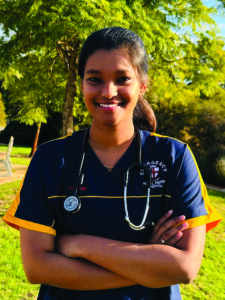
Dr Vaishnavi Virupaksha

Vaishnavi Virupaksha recently passed her Australian Medical Council (AMC) Clinical Examination, and she credits her success to determination, hard work, and a transformative Observership Program at Royal Perth Hospital (RPH). One of three female doctors accepted into this inaugural pathway at RPH in May 2024, Vaishnavi’s story is a unique one. 

Born and raised in WA, the Perth Modern School alumna moved to the bustling city of Bangalore in southern India in late 2016 to care for her ageing grandparents. Whilst there, she completed a medical degree at the Sri Sidhartha Medical College, and even worked as an intern in a couple of local tertiary hospitals. 

Six years later, she was back in Perth, eager to work in the Australian healthcare system; but found no doors sliding open to accommodate the credentials of an IMG. 

“I passed the AMC Part 1 Exam, but most roles require at least three to four years of work experience, which I didn’t have. It was frustrating, and I was unemployed for about six months,” Vaishnavi recalls. 

“I then heard about Observership Programs and was thrilled when I was selected for one at RPH.”

Over the course of three months, Vaishnavi underwent an intensive learning journey – one that allowed her a ringside seat at the front lines of a tertiary hospital.
Don’t give up. Keep pushing and applying. And consider an observership.

Under the eagle eye of a principal supervisor, she rotated first through RPH’s State Major Trauma Unit, before moving on to Geriatrics in the Ambulatory Unit, and finally the Emergency Department. While not allowed to perform any invasive procedures, Vaishnavi says patient interactions were a particular highlight. 

“One day in Geriatrics, I reviewed an X-Ray with the supervising consultant and took the time to explain it to the patient. I remember him thanking me, saying I’d explained it ‘better than anyone else’ and that he’d remember me. 

“The consultant noticed all this and commended me. It made me realise that even the smallest things you do can go a long way in providing patient-centred, holistic care.”

Throughout the observership, Vaishnavi reports feeling completely supported and encouraged. 

“Our supervisors were pivotal in this. We’d have weekly check-ins and could always reach out. At times, wearing that ‘observer’ badge made me feel a bit out of place and anonymous, but the consultants and residents would go out of their way to be inclusive.  

“The format of the program had supervised teaching, grand rounds, and plenty of non-clinical learning built in as well, which I found incredibly helpful.  

“The Residents we accompanied during Trauma were so accommodating. They’d explain everything, and let me go along to the radiologist and discuss patient scans – it was hands-on learning and helped me settle in quickly. 

“At the end of that first month, my consultant invited me to attend clinic with her. That experience helped me devise different patient plans, which later proved very useful when preparing for the AMC Clinical Exam.”  

At the end of the program, Vaishnavi along with her fellow observers – two young mums from Pakistan – were all offered jobs at RPH. 

“What a feeling! Made even more special by the fact that all three of us got it together!” Vaishnavi smiles broadly.

Currently working in General Medicine, she has some wise words for all those IMGs who are out there hoping to land a good opportunity. 

“While not every program may result in a job, it’s a fantastic safety net that allows you to slowly ease yourself into the hectic pace of the medical system here!”

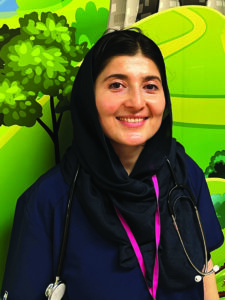
Dr Shazia Shah

Dr Shazia Shah

While Vaishnavi Virupaksha has managed to secure that long-held dream of working as a doctor in the Australian system, for Shazia Shah, an IMG from Pakistan, things are only just taking off. 

Currently on a workplace-based assessment (WBA) program run out of Armadale Health Service (AHS), the young doctor is thriving despite the demands of a paediatric rotation.

The journey to this point, though, has been arduous. For five years – from 2014 when she immigrated to Australia until 2019 – Shazia lost track of the number of rejection letters she received.

Her seven years of work experience in Pakistan did not qualify towards the centralised recruitment system requirements in WA that stipulated a minimum of six months’ work experience in an Australian hospital or equivalent health setting.

Not being a doctor was never a choice. It’s the only thing I can do, and I’ve always loved it.

Despite studying for and passing the AMC Part 1 Exam as well as undertaking a couple of informal observerships during this time, a disillusioned Shazia decided to return to Pakistan in 2019. 

“It turned out to be a good move, and I worked for a while in a hospital and General Practice,’ she says, adding that it reinforced her determination to make it as a doctor in Australia.

“There were a lot of emotions to deal with, but right at the very top was that sense of not wanting to give up.”

Like Vaishnavi, Shazia made her way back to Perth in 2023. She signed up for a Master’s degree in Public Health, while also setting her sights on a formal Observership Program. The tide slowly began to turn when she was accepted into the program at Sir Charles Gairdner Hospital. Four months in, the opportunity to undertake a similar program at AHS came up. Shazia took a punt. 

For the next 10 weeks, Shazia was put through the paces of a program she says was perfectly tailored to the needs of immigrant doctors like herself. 

“It was such an amazing opportunity to understand the workings of the Australian medical system and to do it in a smaller hospital. The timing was also particularly good as the Digital Medical Record program went live at Armadale Hospital in October 2023. It was an exciting learning curve.”

Soon after the observership ended, Shazia heard AHS was planning to launch a Department of Health-sanctioned 12-month workplace assessment pathway.

“What was promising about this WBA program was that I didn’t need to have six months of work experience. A six-week observership in an Australian hospital would be enough!” 

In January this year, Shazia along with six other IMGs commenced a rigorous program of supervised learning and assessment. 

“If I complete all my rotations and successfully pass all my assessments, I will receive my AMC certificate and Ahpra general registration,” Shazia says, with a mixture of hope and confidence.

The support received from her supervisor and medical education officer, she adds, has been outstanding.

“The consultants and junior doctor colleagues have been equally encouraging, keeping an eye out for us during rounds.”

After years of trying, Shazia has finally found her way in. She says, there was never a question of an “out”. Medicine runs strongly in her family – with her brother, sister and two other relatives all doctors. 

“Not being a doctor was never a choice. It was never a thought. That’s the only thing I can do. And I have always loved it.

“It’s been a long road, but I was just trying to find my way. Now I want to help others like me and point out the various ways in, like the WBA program here at Armadale, Rockingham General Hospital and Peel Health Campus.

For more information on pathways for IMGs, visit:
osrecruitment.health.wa.gov.au/International-medical-graduates.

Start typing and press Enter to search