




A destiny paved in the outback

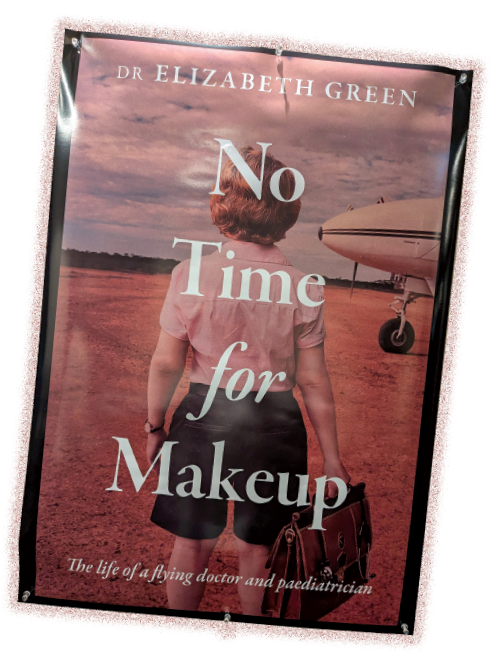
When did the thought of becoming a doctor first cross your mind?
I feel there were so many crumbs along the way that pushed me towards medicine. Mainly a couple of incidents around the time I was eight years old, living in Kununurra.
A young boy my age fell off the back of a boat I was in, and the propellors cut into the back of his leg. There was a lot of blood, and people were trying to help him. That incident triggered a sense of curiosity as to how I could help someone in that situation.
Not long after, I was on an aircraft accompanying my Dad on a parish visit to a cattle station. Along the way, we were diverted by the Royal Flying Doctor Service (RFDS) who had engine problems on their aircraft, and we ended up looking after a man who had fallen into a campfire. As he boarded our aircraft with his severe burns, I recall seeing the pain in his eyes. I think that’s when it all really began for me.
I also had many strong real and fictional female role models, including Florence Nightingale and Marie Curie whose lives fascinated me. I don’t think I gave myself any other choice – I was going to be a doctor, and that was it!
Your father was a priest and your mother, a teacher. Did either of them expect you to follow in their footsteps?
My mum’s brother and sister were also teachers, and I think she naturally expected me to follow suit. Medicine was certainly not on my parents’ radar. Nobody in my family had gone to university; and they felt a medical career was for the wealthy and “very clever” people, not for me!
They tried to get my Chemistry teacher to talk me out of it. Thankfully, he told them firmly that if I wanted to do medicine, then that’s what I would do. They never doubted my decision after that, and supported me all the way.
Was medical school as you expected?
I knew it wouldn’t be easy. The enormity of the work, long hours and sense of isolation were quite hard. But there were also the moments when I managed to do something that made a difference, or had time for love and friendships.
I spent most of my university years with imposter syndrome – even when I got through with Honours and in the top 30, I still felt there must have been some mistake. I guess deep down I was still a little girl from the bush, and couldn’t believe I was actually following my dream.
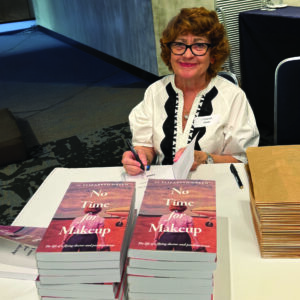
A proud moment: Dr Elizabeth Green signing her books at the recent book launch (April 2025).
How did you start with the RFDS? Did you enjoy your time as a flying doctor?
In a way, joining the RFDS was pure chance. I had initially applied for a GP role in Seymour (Victoria) – but my application went astray, got redirected and misfiled. When it eventually reached the right person who called me up with a job offer, I had accepted the RFDS job just 10 minutes earlier. Had I heard from Seymour first, I would have taken up the GP role. It still gives me goosebumps recalling that timing that changed the course of my life.
The RFDS was my favourite job; the first time I felt like a ‘real’ doctor. I was on my own and out of my comfort zone. But I had a lot of support, and everything I had learnt from my fantastic mentors and teachers. It was a great experience, with some terrifying times – like when I had to go underground to care for a miner trapped in a rockfall.
We were an ICU in the air. I learnt so much from the amazing flight nurses. The pilots were remarkable in setting out flight plans to destinations with no physical address. When you spend two to three hours inside an unpressurised aircraft in the middle of the Australian outback; when it’s pitch black and you’re flying into an isolated community; and preparing to land on a dirt track lit by flares, you had to trust the pilot 150%. In all my time in Kalgoorlie, they never got it wrong.
The RFDS’ work is incredible – and so is the expert care of the doctors, nurses, emergency staff, and everyone who takes over after the patient’s arrival. It’s never about one doctor, and it was never about me. It’s about every single person who works to save a life. A real team effort.
What steered you into paediatrics?
I once had to fly across the desert with a pilot and nurse to pick up a premature newborn from under a tree in the desert in Kiwirrkurra and get the baby to the nearest nursery, which turned out to be Alice Springs. On another occasion, I had to care for a child from the Central Desert in Warburton who was severely dehydrated with gastroenteritis, and could have died. I managed to keep the fluids up and support blood volume until I reached Kalgoorlie and stabilised the child for another aero-medical evacuation to Perth for tertiary care.
These incidents kindled my passion to care for kids, and got me thinking of paediatrics as a career path.
What did you love about being a paediatrician?
I loved the kids and their trust in me. Kids get sick quick, but they also get better quicker, and they don’t complain much. Besides, I’m a short person, closer to their height; so I felt like I could talk to them on their level!
It’s been such a great privilege, because my passion as a paediatrician has been centred on early childhood and the vulnerability of childhood years. My dad suffered developmental trauma in his childhood, and the impact on him was shocking; something I didn’t know until I spoke to him at length in 2022 about his childhood home.
Everything we do to a child has an enormous impact on their mental health and future: the way we speak to them; the things we say around them; and the way they feel around us. I feel very strongly about prioritising those early years as much as possible. Having been a paediatrician puts me in a position to do what I can in this space.
In your first book, Parenting Forever, did you draw from your experience as both a parent and a paediatrician?
I spent seven years writing that book when my daughters were very young. I thought I could be a better parent, and I tried to share some insights that might have been helpful, both as a parent and as a paediatrician.
Due to the shortage of paediatricians and the long wait for consults, many parents were telling me I should write a book about these issues, including all the helpful advice I had given them. So I wrote it for my patients, as well as to acknowledge the work and wisdom of great paediatricians (now deceased) like Dr Trevor Parry, Dr Rex Henderson and Dr Paul Carman.
I wanted to help families navigate the developmental stages of childhood and complex conditions like anxiety, autism, ADHD and learning difficulties that can present during those times. I didn’t want to ‘medicalise’ the kids. It was more about listening to them, believing in them, and being kind to them.
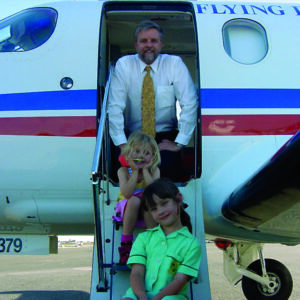
Elizabeth’s husband Dr Stephen Langford (then Medical Director at RFDS): with a new Pilatus PC-12 aircraft, accompanied by daughters Josephine and Katherine (Nov 2001).
When did you first think about writing your memoir, and what inspired you?
In 2022 I stopped my private practice when my mum became ill. I had time to sit back and reflect on my medical life. While being a paediatrician for 24 years was a wonderful privilege, it also came with a large emotional load from looking after very complex patients. It was incredibly exhausting, having at the same time raised my own two children and trying to get that work-life balance right.
My parents’ illnesses made me realise they had an ‘expiry’ date, so I started talking to them and writing things down. And I made a determined effort to get a certain amount of writing done each week. It took three years to get it finished.
I wanted my memoir to be relatable – about life, death, and human connection. I wanted to show that none of us is perfect. Doctors try hard to be perfect, but sometimes things do go wrong. And sometimes it’s good when things go wrong, so we can fail and learn from those mistakes. I wanted all of us in medicine to think about how we treat our patients; how we treat one another as colleagues; and how we treat our family members.
I wanted to let patients know how raw and vulnerable some young doctors can be (myself included). And I wanted to show them the heart and soul and compassion in the medical profession.
It was fulfilling when many doctors who read my memoir told me how relatable my story was to their lives, and went on to share their life experiences with me.
Had you hoped that one of your daughters would take up medicine?
Not at all. Their interests were always clearly in the creative arts, which has worked out well for them in their acting careers. My daughters were very supportive and helped with parts of my memoir. I’ve kept their life journeys out of my book, as they are their stories to tell someday.
What’s your advice for a junior doctor aspiring to become a paediatrician?
I’d say follow your heart and your passion, and give it a go. It’s a great privilege and opportunity to help save children’s lives. Focus on your goal, have trust in people around you, and ask for help when you need it.
There may be times when you have to deal with aggression from your patients’ parents or families. Just remind yourself that their anger isn’t personal – it’s the result of anxiety and concern for their child, or the frustration of having to wait a long time (often months) for a paediatric consultation.
The doctor–patient relationship should never be combative, although at times it can feel that way in our current world. If things aren’t going well, confront the situation and work it out so that little problems don’t become big ones.
I hope some young doctors can read my memoir and be inspired. If my book helps one young doctor think about medicine differently, then I’d feel all the hard work and effort was worthwhile!