




Medical mums and matrescence

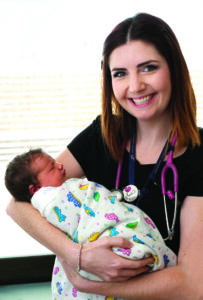
Dr Rikki Priest with newborn at King Edward Memorial Hospital.
Few moments change a doctor’s life as profoundly as becoming a parent. Matrescence, a term first coined in 1973 by anthropologist Dana Raphael, describes the developmental transition into motherhood.
Similar to the transformational period of adolescence, where a child undergoes biological, sociological and identity transitions into adulthood, matrescence encompasses equally monumental change. These include profound hormonal fluctuations, structural and functional changes in the brain, visible and invisible alterations to the body, shifting dynamics in relationships, and the weight of cultural expectations about what it means to be a “good” mother.
For doctors, these already profound shifts are compounded by the intensity of medical work, the culture of self-sacrifice, and the expectation to continue performing at a high level regardless of what is happening at home.
Returning to work after maternity leave, after six months at home with our daughter, was a disorientating experience. It was made all the more complex by the fact that I was returning not only as a doctor, but as someone who had recently been admitted to the very maternity hospital where I worked, during a period of perinatal mental illness.
My story is not unique. Doctors return to work carrying the invisible weight of early parenthood – the fatigue of caring for an infant, the slow work of physical recovery, the quiet but profound reshaping of identity, and the unspoken pressure to perform as if nothing has changed. Yet, medicine offers little room for this reality. Long hours, a culture that prizes endurance and self-sacrifice, and the stigma of showing vulnerability all magnify the challenges of matrescence.
Doctors in parenthood often live in two competing worlds. At home, they are immersed in the all-consuming demands of new parenthood. While at work, they are expected to show up as reliable, competent professionals, with little acknowledgement that their personal world has been upended. This duality leaves many feeling stretched thin, guilty in both directions, and at risk of burnout.