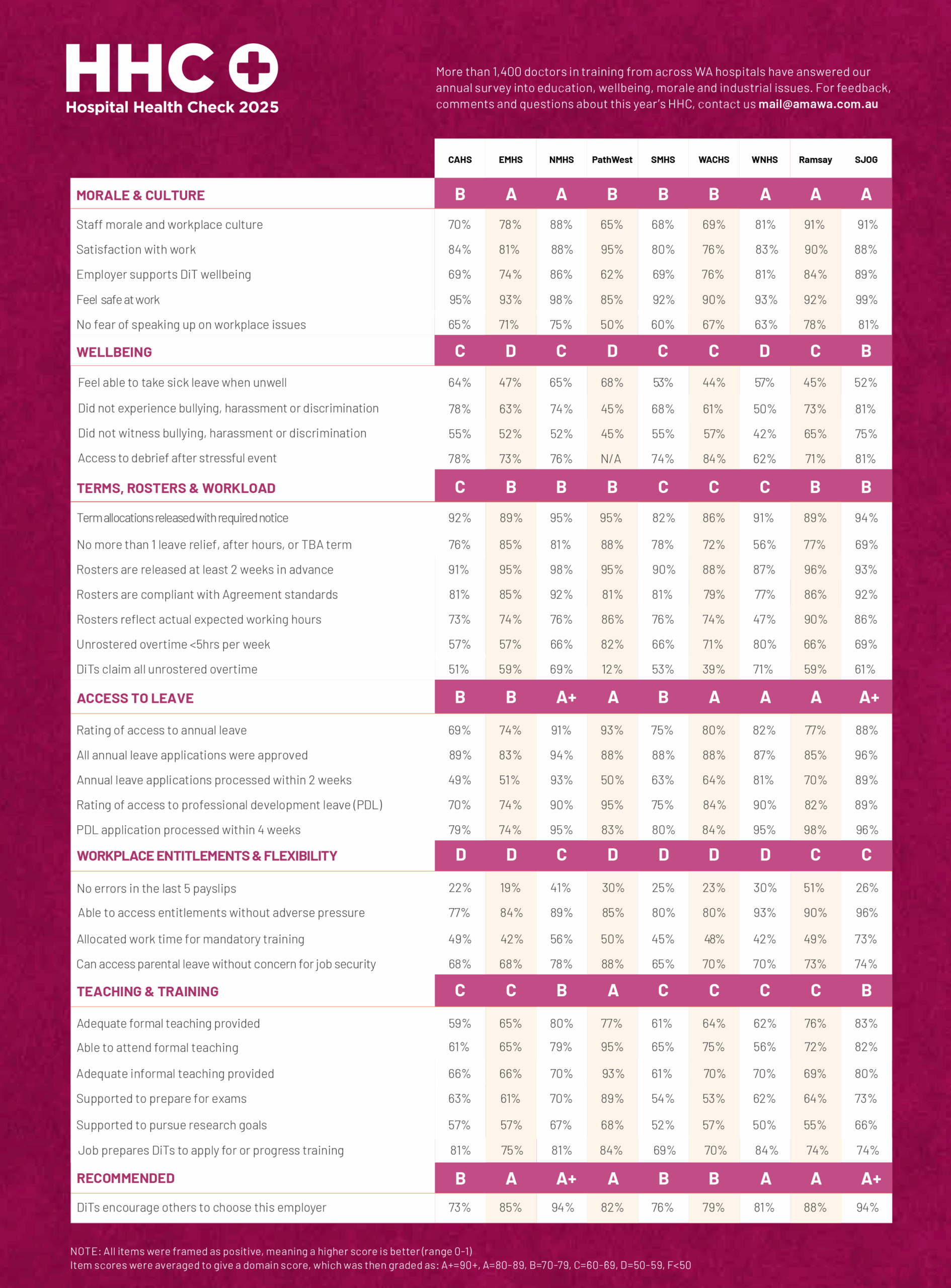
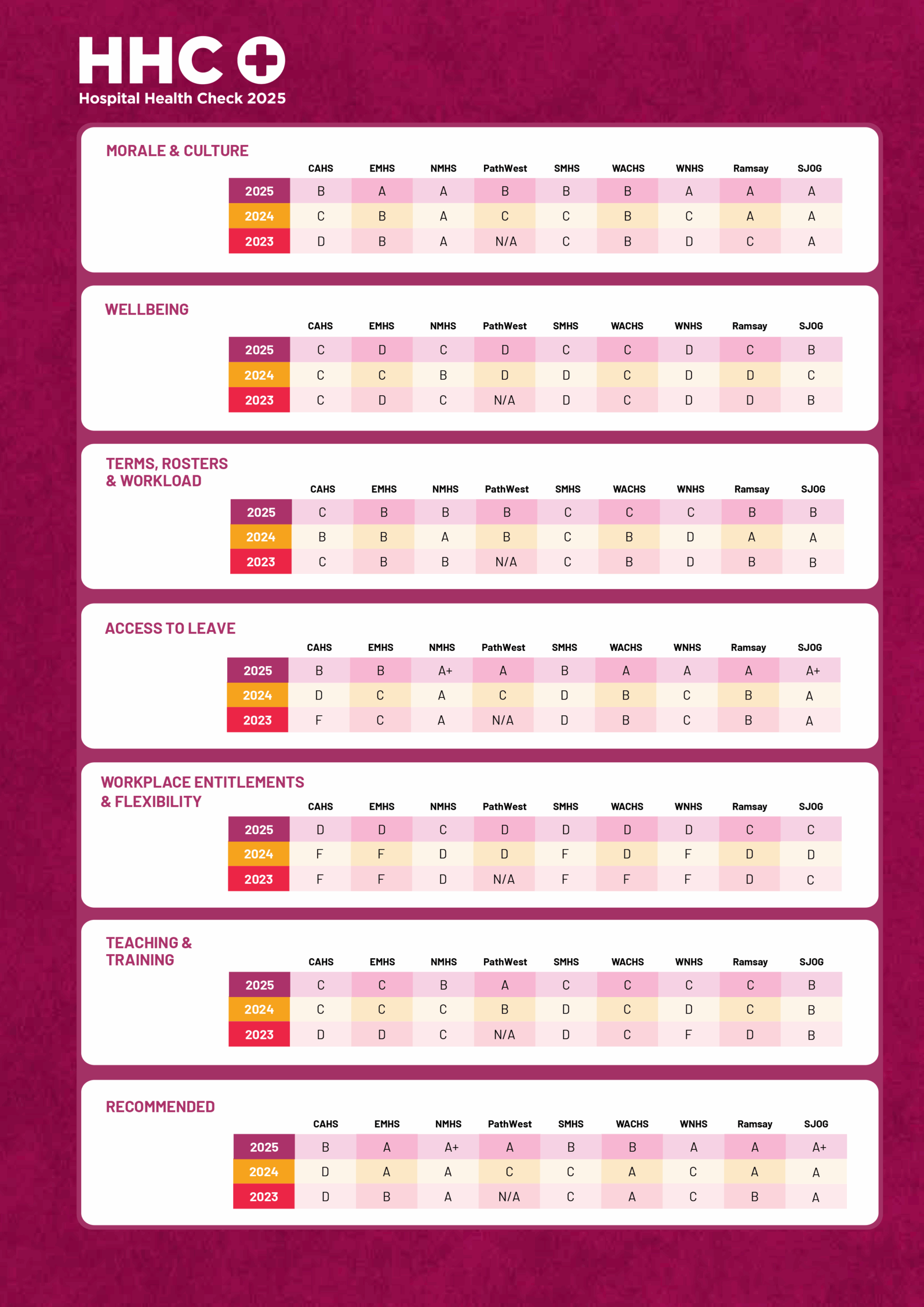
It was another outstanding result for the AMA (WA) Hospital Health Check (HHC), with participation exceeding last year’s record by several hundred. It wasn’t the only record broken. In good news for hospital employers, for the very first time there were no F grades across any of the performance indicators. It was also the first time questions were asked that were specific to International Medical Graduates (IMGs).
It demonstrates what an indelible impression the survey, adopted around the country by other state AMAs, has made since its inception in 2015. It is providing a voice to doctors at the most impressionable and vulnerable stage of their medical careers, while shaping the way our hospital service providers engage with doctors in training (DiTs).
AMA (WA) President Dr Michael Page said the pressure our doctors are under was evident in the results, and can be directly attributed to our lack of health system capacity.
“Our doctors are burning out from the relentless workloads pushed on them by perpetually over-full hospital wards and EDs. It points to the need for major capacity building by expanding our public hospitals, supporting our private hospitals, and training more specialists,” he said.
With the application period for internships now ended, we believe the HHC 2025 has equipped our newest doctors to make well-informed decisions on where they wish to work during this formative period.
The following pages include key information from the HHC 2025 report available at amawa.com.au/wp-content/uploads/2025/05/AMA-WA-2025-HHC-Report.pdf, as well as insights from our Doctors in Training Practice Group Co-Chairs, and representatives from our Hospital Service Providers.
HOSPITAL HEALTH CHECK 2025 KEY FINDINGS
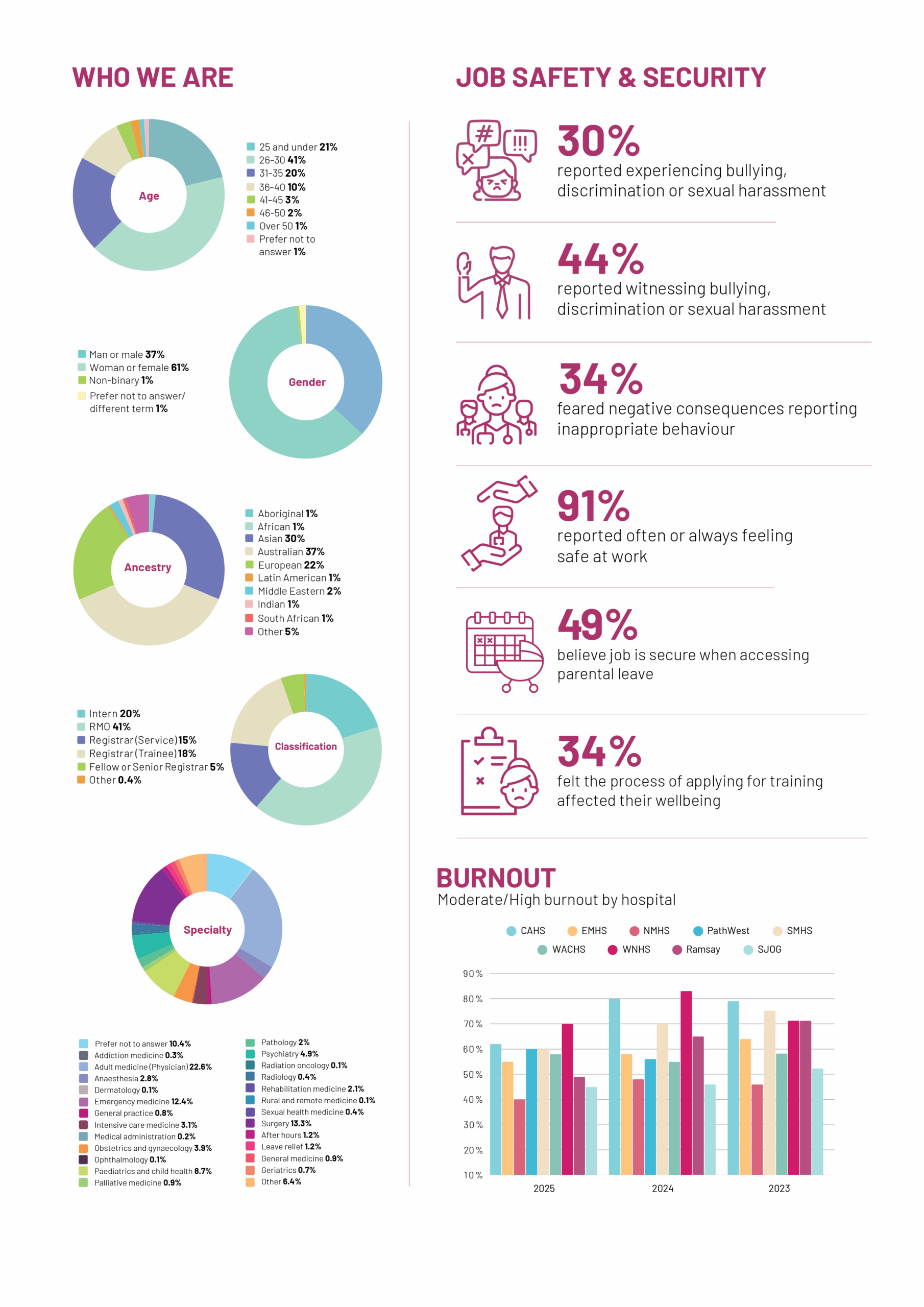
Record survey, with almost 1,500 participants
Notable increase in unrostered overtime hours worked
For the first time since HHC began in 2015, no F grades recorded
45% working on-call overnight get 3-5 hours sleep and work the next day
1 in 3 experiencing bullying, discrimination or sexual harassment
More than half say there aren’t enough training opportunities in WA
IMGs almost twice as likely to experience discrimination
1 in 3 felt applying for training had affected their wellbeing
Significant improvements in access to leave
1 in 3 fear negative consequences in speaking up or reporting adverse behaviours
52% overall have moderate/high burnout (61% in 2024)
Improvements in morale and culture but decline in wellbeing