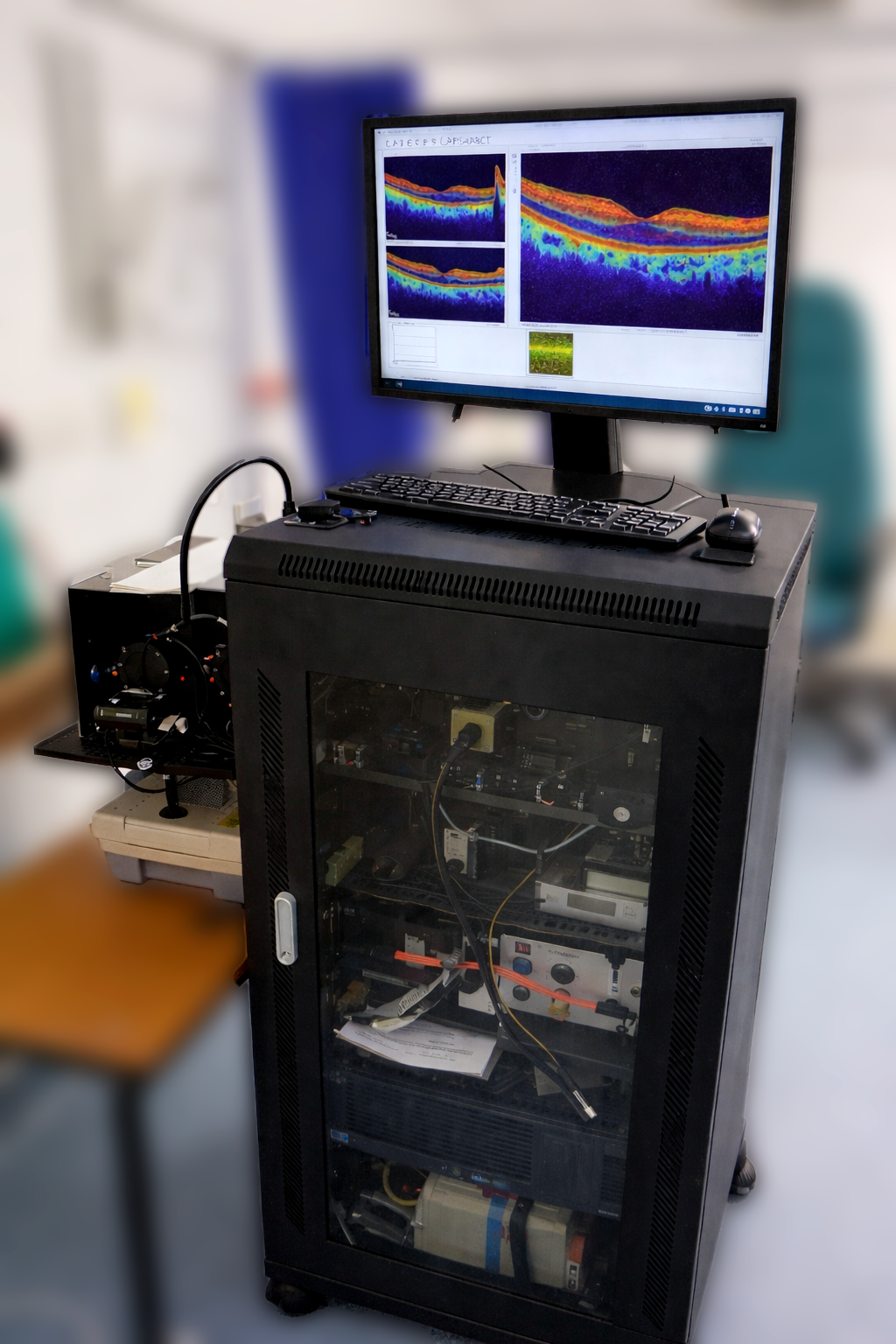
Two hi-tech medical devices being clinically tested at Fiona Stanley Hospital in Perth are designed to be a quick, easy and non-invasive way to check a patient’s heart health before surgery.
The devices have been developed by Dr Hadi Afsharan at the Harry Perkins Institute of Medical Research, supported by more than $1.8 million in funding from the State Government’s Future Health Research and Innovation (FHRI) program and the University of WA.
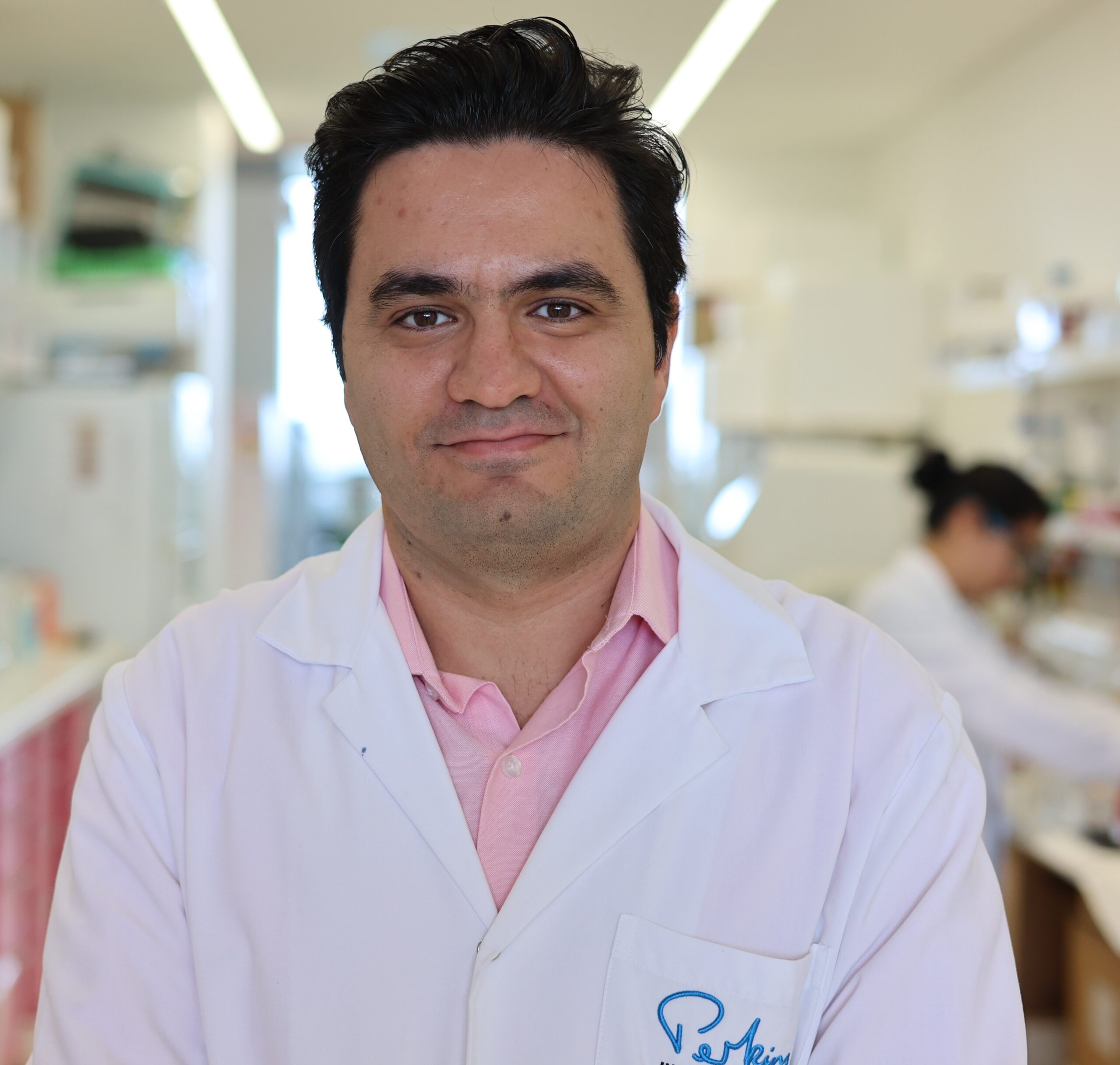
Dr Hadi Afsharan – Perkins Research Fellow, Cardiovascular Science & Diabetes.
One device uses safe, light-based technology to capture high-resolution images of the retina to identify markers of cardiovascular disease; the other is a small electromagnetic sensor that can check heart function by detecting telltale movements in the jugular vein without even touching the skin.
“All patients who go through surgery need to be tested for any sort of cardiovascular disease, including heart disease,” Dr Afsharan says.
“Most of the tests now are invasive, but the technologies that we have, though still in the research phase and in clinical trial, can eventually, if successful, replace these methods.”
Dr Afsharan earned his PhD in Biomedical Engineering from UWA in 2023, and it was his thesis – Development of Polarisation-Sensitive Optical Coherence Tomography [PS-OCT] for Application in Medical Diagnosis – that led to his research into using eye imaging to detect heart disease.
“It was during my PhD that we developed the system,” he says.
“PS-OCT is a way to detect any kind of heart disease through the eye, by looking at the retina at the back of the eye. We look at the blood vessel walls – how thick they are and their organisational integrity. We also look at the nerve layers because the retina is full of nerves, and what we see are electrical pulses going through those nerves to the brain.
“Heart disease can affect both the blood vessel walls and the nerves. A person with coronary heart disease has blood vessels of the heart that are blocked and filled with plaque. The same thing happens all over the body and in the retina as well.
“Because the retina is the only tissue inside the body that can be seen non-invasively and through optical methods directly, it can be used as a proxy.
“If the plaques are generating in the coronary arteries of the heart, the same plaques are building up in the retinal blood vessels as well. Our system can distinguish the plaques in the retina as a thickening of the blood vessel walls.
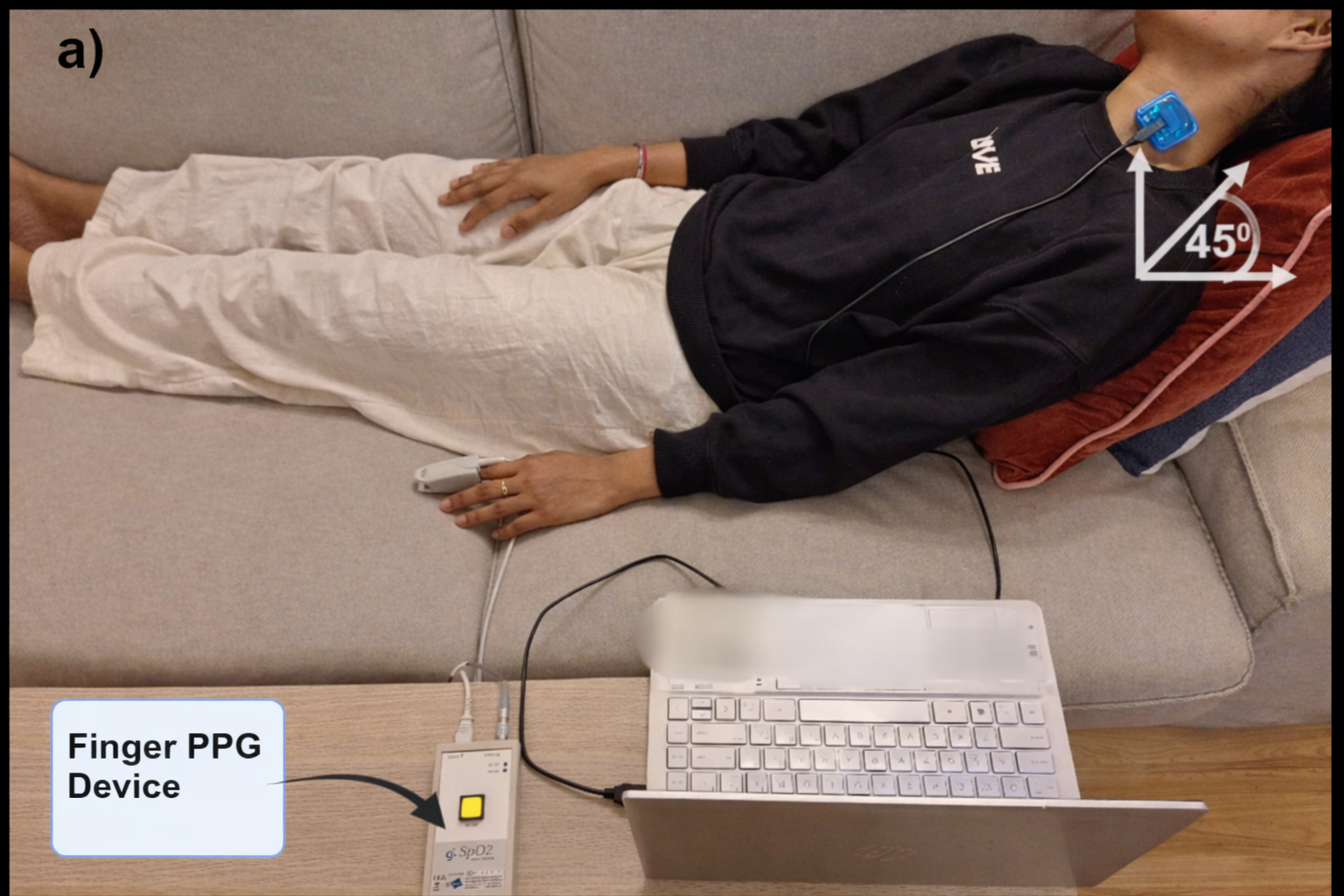
Jugular Venous Pulse (JVP) sensor, recording the flow inside the veins of the neck.
“The system is equipped with AI and deep learning, and it can analyse the images and spit out the result that the doctors and clinicians need in just a few seconds. So it could be done exactly prior to anaesthesia or surgery, but I think to be in the safe zone, it’s better to do the test two or three days before the surgery.”
The PS-OCT system is in the second year of clinical trial at Fiona Stanley Hospital. The machine is housed in the CAT lab, and the 200 or so patients who have registered for the trial have heart checks and angiograms at the same time as having retinal images taken for comparison. The aim is to register another 150 participants this year.