Archives

  • February 2026
  • January 2026
  • December 2025
  • November 2025
  • October 2025
  • September 2025
  • August 2025
  • July 2025
  • June 2025
  • May 2025
  • April 2025
  • March 2025
  • February 2025
  • August 2024
  • July 2024

Categories

  • 2025 MEDICAL CAREERS EXPO
  • 2025 RURAL HEALTH AWARDS
  • ADVERTORIAL
  • ADVERTORIAL – NORTH METROPOLITAN HEALTH SERVICE
  • AGED CARE
  • AMA (WA) PRACTICE GROUPS
  • AMA FINANCIAL SERVICES
  • AMA25 CONFERENCE
  • AMBULANCE RAMPING
  • ANNUAL GENERAL MEETING
  • AUSTRALIA DAY HONOURS
  • AUTHOR INTERVIEW
  • CLASSIFIEDS
  • CLINICAL EDGE
  • COLORECTAL CANCER
  • COMBAT SPORTS
  • COMMENT
  • CONGRATULATIONS
  • COVER STORY
  • COVER STORY – SURGERY & ANAESTHESIA
  • CPD HOME
  • DHASWA
  • DOCTORS IN TRAINING
  • DR YES
  • DRIVE
  • FAMILY LAW
  • FEATURE – PATHOLOGY
  • FEATURE – RESEARCH PROFILE
  • FEATURE – WOMEN & BABIES
  • FROM THE EDITOR
  • GRADUATION CEREMONIES
  • HEALTH INFRASTRUCTURE
  • HEALTH LEADERSHIP
  • HEALTH WATCH
  • HOSPITAL HEALTH CHECK (HHC) 2025
  • IMG DIARY
  • INDUSTRIAL RELATIONS
  • INTERN ORIENTATION WEEK
  • INTERNSHIP
  • MEDBALL25
  • MEDIA MATTERS
  • MEDICO-LEGAL MATTERS
  • MEET THE COUNCILLOR
  • MEMBER BENEFITS
  • MEMBERS SOIREE
  • MENTAL HEALTH FEATURE
  • MINISTER'S MILESTONE
  • NEWS
  • ON THE SHELF
  • ONLINE SAFETY
  • OPINION
  • OPINION – RACGP
  • OUT & ABOUT
  • POLICY
  • POLICY – ERIDEABLES
  • PRACTICE MATTERS
  • PRESIDENT'S DESK
  • PROFESSIONAL NOTICES
  • PROFILE
  • PUBLIC HEALTH – WAAC
  • RESEARCH
  • RURAL PRACTICE
  • SLEEP SURVEY
  • SOCIAL MEDIA LEGISLATION
  • STATE BUDGET 2025-26
  • STUDENT SPEAK
  • THE LAST WORD
  • TRANSPLANT MILESTONE
  • VALE
  • WHAT'S ON
  • WINE

Advertisment

http://Advertisment

Newsletter

  • Current Edition
  • Previous Editions
    • December 2025 – January 2026
    • October – November 2025
    • August – September 2025
    • June – July 2025
    • April – May 2025
    • February – March 2025
    • Older Editions
  • Advertise with us
  • AMA (WA) Homepage
  • Current Edition
  • Previous Editions
    • December 2025 – January 2026
    • October – November 2025
    • August – September 2025
    • June – July 2025
    • April – May 2025
    • February – March 2025
    • Older Editions
  • Advertise with us
  • AMA (WA) Homepage
Back To Home
Previous Post
Hi-tech answer to pre-surgery heart checks
Next Post
Are we on the right path?
COVER STORY – SURGERY & ANAESTHESIA

Young people help set priorities in paediatric anaesthesia research

Dr Aine Sommerfield

Perth Children’s Hospital Clinical Research Program Manager

Claim EA: Professional Reading CPD hours with AMA CPD Home. Learn more in our helpful article and log your hours.

Australian children and young people have for the first time been given the opportunity to share their priorities for research in paediatric anaesthesia. Safety, pain and anxiety were their top three concerns, but they also identified better communication from doctors, and emergence agitation and “feeling strange” when waking up after anaesthesia, as important to them. 

These findings are the result of a world-first project led by the Anaesthesia Research Team at Perth Children’s Hospital (PCH), headed by AMA (WA) member Prof Britta Regli-von Ungern-Sternberg AM FAHMS.

The increased emphasis on patient and family-centred clinical care has driven a new consumer engagement approach in research.

In anaesthesia research, as in many medical areas, research focus has been mainly determined by a combination of the researcher’s expertise and personal research interests. However, interest has turned to working with consumers to identify their research priorities. 

The National Health and Medical Research Council guidelines dictate that, at a minimum, consumers and community should be involved in four key stages:

  1. Determining research priorities, including what should be researched.
  2. Developing research concepts/hypotheses/questions and designing research projects.
  3. Research conduct including participant recruitment, consent and responsibility (ethics, governance), and oversight or governance of the conduct of the research.
  4. Reporting, communications, and publication/dissemination and translation.

The PCH team began by partnering with 850 parents/carers across Australia to identify their top 10 research priorities in a multistep process involving online surveys and a consensus workshop. This gave Australian consumers the opportunity to shape the paediatric anaesthesia research agenda. Their top priorities were safety, anxiety, and pain management. 

Since completing the project, the research team has developed new studies addressing the top priorities for parents, such as the STARFISH project investigating the use of sensory toys to help manage children’s pre-operative anxiety, which addresses the number 2 and number 7 research priorities for parents.

While this was an important exercise, the team was aware that the concerns of parents/carers may not always reflect those of their child. Therefore, we decided to repeat the project, but this time working with children and young people aged from six to 18 years.

As the person who leads the consumer prioritisation projects for the team, I know there was some concern around whether we could engage enough children and teens, particularly as a key first step involves consumers entering research ideas in free text in an online survey. We were a bit worried that we wouldn’t get ideas from the children and young people, so we added in an extra step of an online community conversation in parallel to the idea-generating survey. These two combined ensured we had sufficient research ideas to move the project forward. 
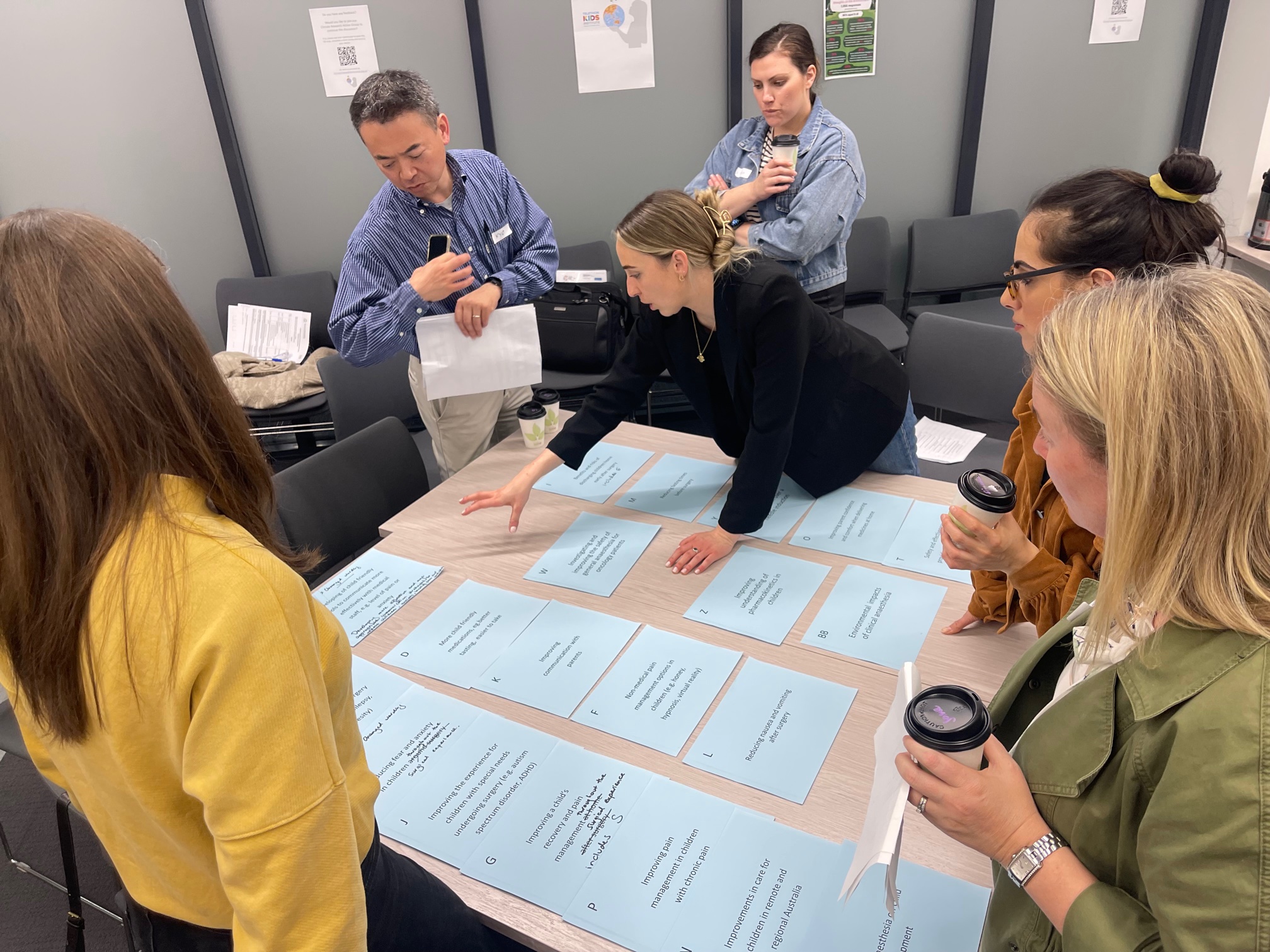
Parents and researchers discussing research priorities for children having anaesthesia at the consensus workshop in September 2021.

After an interim prioritisation survey and a final consensus workshop, both held online, the final top 10 priorities of Australian children and young people was complete. The project, which has engaged more than 350 children and young people from all Australian states and territories, was a great success; and our initial concerns were not realised. In fact, the young consumers were engaged, passionate, and very keen for their voices to be heard.

The priorities of children and young people differed from those selected by the parents/carers. In fact, there were only five common priorities in the top 10 lists when those of children and young people were compared to those of parents/carers. Other interesting differences included the importance that children and young people placed on the effects of anaesthesia on mental and emotional health, how medicines worked differently between people, and whether children felt pain differently.

These prioritisation projects undertaken by the Anaesthesia Research Team have made a valuable contribution, not just with guiding research, but also matching the needs of funding agencies who are increasingly placing importance on meaningful engagement with consumers.

Following on from these projects, the team has worked with parents/carers, paediatricians, GPs, and Down Syndrome WA to identify the top 10 consumer research priorities for children with Down syndrome. The top two were:

1) developing a “gold standard” model of care, including screening health checks across all levels of care; and
2) sleep quality (including obstructive sleep apnea, snoring, breathing problems, circadian rhythm).


“ The priorities of children and young people differed from those selected by the parents/carers. In fact, there were only five common priorities in the top 10 lists when those of children and young people were compared to those of parents/carers.

Another concern that emerged for parents was the issue of atlantoaxial instability. Although it is a rare condition, sports organisations at all levels commonly request neck X-rays from athletes/participants with Down syndrome. To date, no studies have assessed cervical screen radiographs as a valid screening tool, and there is little evidence to show that radiographs are useful for identifying at-risk children or preventing spinal cord injuries. This has contributed to elevated concerns and avoidance of activities. Advocacy that clearly articulates the current evidence and research that further describes the pathogenesis of atlantoaxial instability is considered a priority for parents/carers of children with Down syndrome.

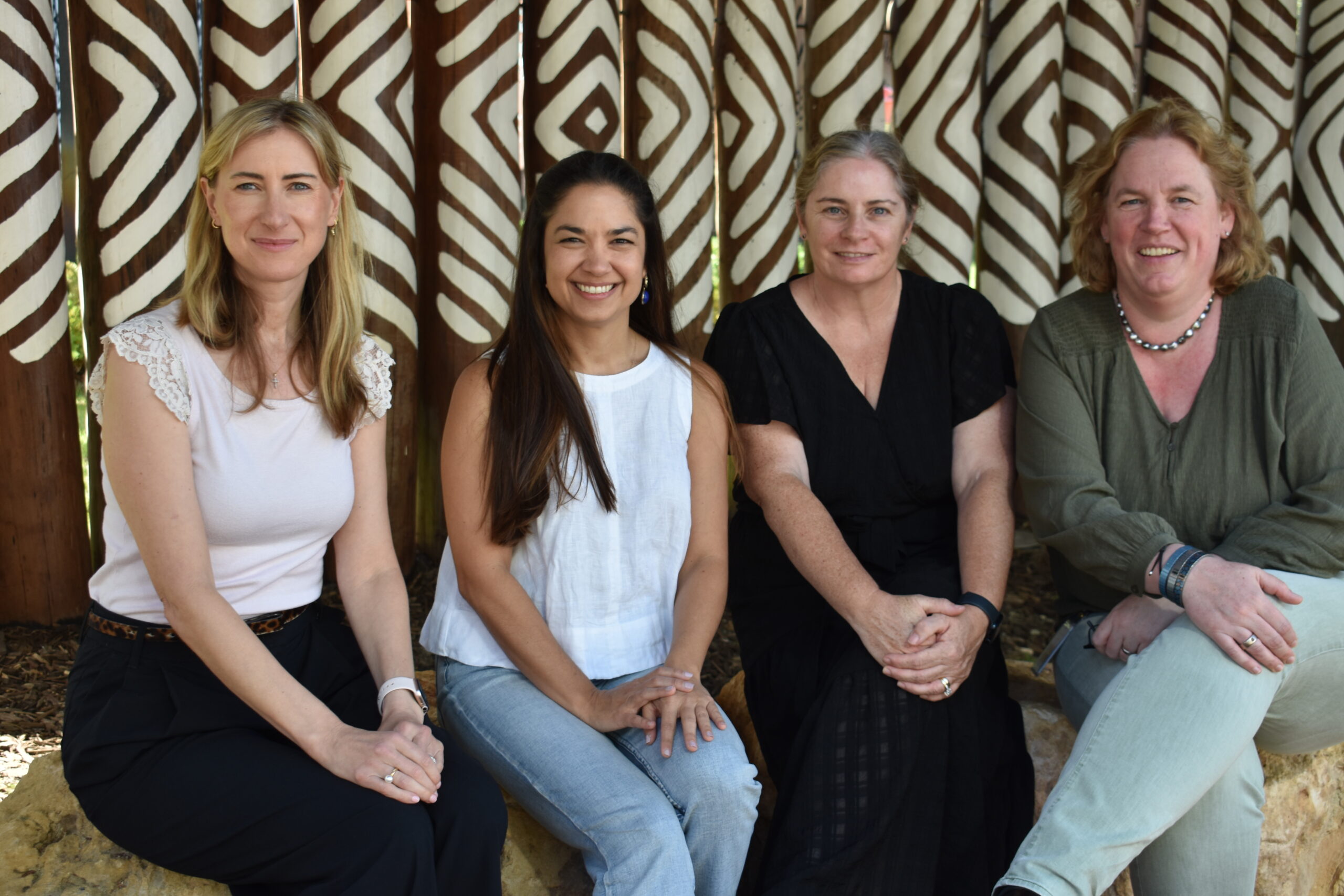
Members of the Down syndrome prioritisation study team – Dr Ellen Taylor, Dr Aine Sommerfield and Prof Britta Regli-von Ungern-Sternberg with Patricia Macchiaverni (second left), the parent of a child with Down Syndrome, who took part in the project.

Another recently completed prioritisation project was conducted for children requiring neonatal surgery, an often-neglected group in neonatal research. These children are a distinct cohort, with 1,108 neonates in Australia undergoing major surgery in 2021, defined as surgery opening a body cavity. The most common procedures were gastrointestinal (60.2%) and cardiac surgeries (22.7%). Alongside neonatologist and general surgeons, and more than 250 parents/carers and adults with lived experience of neonatal surgery, the consumer research priorities for this group were finalised. Psychological supports and communication with families, as well as the immediate and long-term physical and neurodevelopmental impacts of neonatal surgery ranked highly.

An ongoing ambitious project is determining the research priorities for children living with chronic pain. The project involves researchers working with nurses, physiotherapists, GPs, pain doctors, OTs and psychologists, as well as children aged from six to 16, young people aged 17-25, parents and clinicians.

“ Engaging consumers in research is valued by consumers as a recognition of their lived expertise, and as a validation of their insights and experience.

These consumer-prioritisation projects are an important step in developing meaningful consumer engagement in research. Being engaged in research is valued by consumers as a recognition of their lived expertise, and as a validation of their insights and experience. The consumers themselves have been eager to contribute, and are keen to see how their contributions to our research can make a difference to the future care for Western Australians having anaesthesia and surgery.

Anaesthesia and perioperative medicine research priorities of parents/carers, children and young people

Parents/Carers

  • Perioperative care for children with chronic conditions
  • Improvements in care for remote/regional children
  • Perioperative experience of children with special needs
  • Improving communication with parents

Common Priorities 

  • Safer anaesthesia for children
  • Fear and anxiety
  • Pain communication
  • Pain at home
  • Child-friendly medications

Children and Young People 

  • Reducing pain after surgery
  • Waking up better after surgery
  • Postoperative nausea and vomiting
  • Safer anaesthesia for children with lung diseases (asthma, sleep problems)
  • Mental or emotional health impacts
Save the article
Previous Post
Hi-tech answer to pre-surgery heart checks
Next Post
Are we on the right path?
Medicus
© 2026 Medicus - All Rights Reserved.

Start typing and press Enter to search

UNLOCK FULL ACCESS TO MEDICUS

You're just getting to the good part! Log in to your AMA (WA) member account to continue reading, or join today for full access to exclusive content, member benefits, and more.

Month End Offer is live!

Get up to 40% off on AMAMedius

AMA (WA) MEMBER ONLY ACCESS

Sign in using your membership email and date of birth.

If you are experiencing issues, please contact the AMA (WA) membership team via email membership@amawa.com.au