Breaking barriers

Paving the way for greater inclusion in medicine

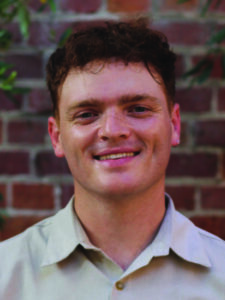
Oliver Smith
President, Medical Students’ Association of Notre Dame (MSAND)

Claim EA: Professional Reading CPD hours with AMA CPD Home. Learn more in our helpful article and log your hours.


Over my last four years of study, the sentiment that the medical profession should reflect the broader society in which it operates has been a recurring topic of discussion. However, medical school inherently disadvantages people from low socio-economic backgrounds and those facing financial hardship, which can preclude entry into its ranks. 

As the cost-of-living crisis rages on, and with limited opportunity and support, the need to consider how these barriers can be overcome proportionately rises. In response, several strategies such as government-funded clinical practicum support payments, targeted medical school entry requirements, and alumni support could be considered to change this narrative.

Students are faced with paywalls from the moment they apply to medical school – from entry exams to GEMSAS application fees, and the increasing perceived need for paid tutoring courses throughout this process; followed by long years of study with minimal   semester breaks and     unpaid clinical placements. 

For many, the time away from work, balance of raising young families, or managing other commitments pose great financial barriers to study. The introduction of a placement support payment designed to be delivered to the students who need it the most, measured using means-testing, would support the retention of students faced with financial hardship, as well as the recruitment of students who would otherwise not be able to afford the cost of study.

As equally important, having entry requirements that actively attract applicants from low socio-economic backgrounds poses a unique way to facilitate admissions. A myriad of systemic and structural inequities perpetuate a divide in employment opportunities. However, people who overcome such hurdles bring their lived experience, resilience and ties to community with them.

The support of students faced by socio-economic disadvantage is not charity, but rather an investment into a workforce equipped with the understanding and skills to address the needs of the community they serve.

Developing admissions policies that consider contextual disadvantage, such as postcodes of residence or place of secondary education, akin to the structure that exists to support entry for students of rural origin, would foster a more diverse student body and, in turn, workforce.

Finally, the role of medical student societies and alumni foundations remains untapped in this domain. The creation of targeted scholarships by alumni has the potential to provide both financial support and mentorship to students. The support to cover costs associated with study, as well as providing guidance to first-generation students, could interrupt the cycle of disadvantage that faces so many, enabling us to build a culture of inclusivity. As a medical community, we have a strong culture that aims to “pay it back” to those walking the paths we have once ventured down. 

As only the second person in my family to attend university, and having faced financial hardship in my formative years, the idea of studying medicine was never something within my reach until later in life. It took the encouragement of a junior doctor whom I was fortunate enough to meet while completing my nursing undergraduate studies, who had come from a similar background to my own, to reveal this door to me. 

Each of us can inspire and empower those around us – this extends beyond the ideas explored and it’s a way we can all help shape inclusion in the medical profession. Overall, the necessity is more than financial aid; it is about how we can expand the culture of medicine and also support those with potential who would otherwise not have the opportunity to become the medical professionals we need the most. 

The support of students faced by socio-economic disadvantage is not charity, but rather an investment into a workforce equipped with the understanding and skills to address the needs of the community they serve.

Start typing and press Enter to search