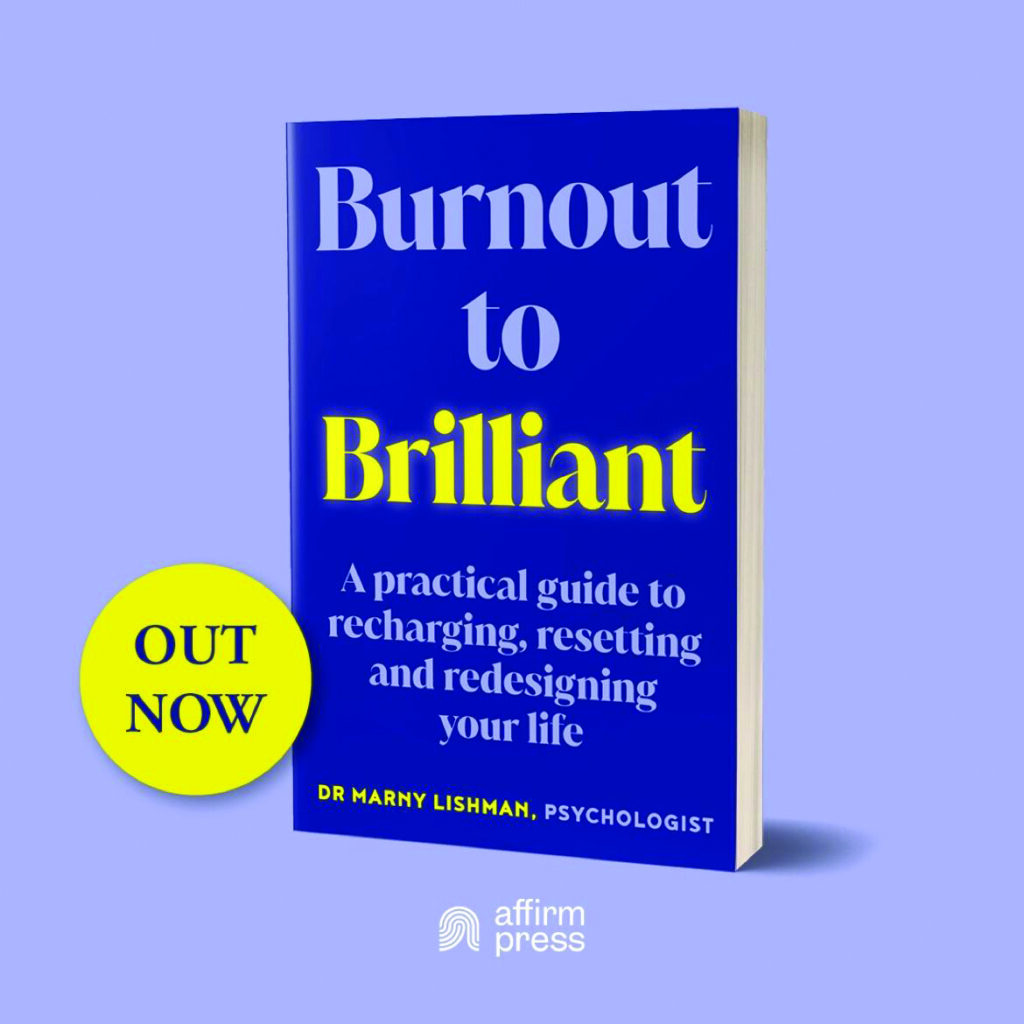
What inspired you to write the book?
Psychologists spend a lot of time listening to people’s stories. Being in a safe space with a supportive person for quite a long period of time means that our clients often share how they really feel and what they’re really thinking. Many people don’t have another person in their life with whom they can be this vulnerable and raw about their inner world. So, when I think about who inspired me to write this book – it’s my clients whom I’ve worked with over the years; those who’ve struggled with burnout. It’s wonderful to work alongside people to help them navigate the experience of burnout and heal from it, but there are so many people who (for a myriad of reasons) don’t reach out for help during this difficult time. This is why books are so great; they have a far reach.
How common is burnout? How many Aussies suffer from it every year?
Burnout is very common. I think the data would be underestimated because many people don’t report it, don’t talk about it, and might not even know they’re suffering from it. Reports usually state around 30–40% of people suffer from burnout in Australia. Burnout seems to be more common in high-stress, high-responsibility and high-expectation industries like healthcare, where doctors face long hours, emotional strain, low control over certain aspects of their jobs (i.e. patient outcomes), and are heavily regulated. Research indicates around 40% of doctors experience burnout. There also seems to be something significant about caring for others that seems to exacerbate burnout.
How do you know when you’re suffering burnout?
Burnout is the physical, mental, emotional and spiritual exhaustion experienced by an individual as a result of unrelenting stress or other negative emotions. For many people, it’s a slow creep; with some not realising they’re burned out until breaking point. I often say to people that our brain and body are whispering things to us all the time, and often we’re too busy to listen. It might be exhaustion; irritability; losing interest in activities you once enjoyed; feeling cynical about the job you once loved; and it might even be feeling disconnected from everyone around you.
How is burnout different from just being tired?
Usually when we’re tired, we can take some time out, perhaps relax or sleep, and then feel less tired or even re-energised. Burnout is a state of exhaustion that doesn’t seem to shift with sleep. It’s full body and mind exhaustion.
Is burnout something you should be medically diagnosed with?
Unfortunately, burnout is not officially classified as a medical diagnosis in the DSM-5, but it is widely recognised as a serious condition affecting both mental and physical health. In 2019, the World Health Organization (WHO) recognised burnout as an ‘occupational phenomenon’, describing it as a syndrome resulting from chronic, unmanaged workplace stress. However, as a practitioner who works with people experiencing burnout, I feel it can come as a result of too many demands from many aspects of life. For example, how can we separate the impact of the emotions that come from a demanding job, family responsibilities, financial pressures, relationship issues or caring for elderly parents? Humans are complex creatures, and we are often responding emotionally to a myriad of issues in our lives.
How can you recover from burnout?
The first thing is to stop, take time off, relinquish many of your roles (temporarily), and just rest and recuperate. For some, this might mean days; for others, it might mean weeks or even months. But it is crucial to just stop completely until the exhaustion is alleviated. Once the person feels like they have a little more energy and can think again, that’s where it’s useful to get help from a psychologist to start working on burnout recovery and planning life going forward.
What are the tell-tale signs of burnout?
Burnout can show up in a bunch of ways, both physically and mentally. A person might feel constantly exhausted, even after a good night’s sleep, and struggle to get excited or motivated about work or things they used to enjoy. There’s often a sense of cynicism or frustration, where everything feels pointless or overwhelming, and they might start distancing themselves from people. It can also show up in more physical signs – like headaches, trouble sleeping, or stomach issues. If they just can’t seem to get back to their normal self, burnout might be the culprit.
Is going from ‘burnout to brilliant’ about self-awareness and self-care?
It certainly is. Recovering from burnout takes time, patience, and a mix of practical life changes and self-care. The first step is acknowledging it and giving yourself permission to slow down or even stop. Then thinking about some of the causes of the burnout. Is it about work? Is it caregiving duties? Is it something else? Or is it all of the demands placed on you? It might involve setting (or resetting) boundaries, like learning to say no to extra work or demands that push you past your limits. And focusing on self-care rituals that need to be incorporated into your schedule going forward – like getting enough sleep, eating well, exercising, and engaging in activities that relax you; whether that’s reading, spending time outdoors or practising mindfulness. The goal isn’t just to bounce back to who we were before, but to make sure the burnout experience is a catalyst for creating a healthier, more sustainable work-life balance that allows you to thrive.
How important is recharging, resetting and redesigning yourself after burnout?
It’s so important. Burnout can be a deeply draining experience, both physically and mentally. Recovering from it isn’t just about resting for a few days. It often requires a more intentional process of recharging, resetting, and sometimes even redesigning aspects of your life to ensure long-term wellness and fulfilment. Burnout doesn’t just fade away with a little time off. It’s a signal from your body and mind that changes need to be made, both internally and externally. View and purchase Burnout to Brilliant.