


Smallpox, leprosy, rabies… and the odd hyena
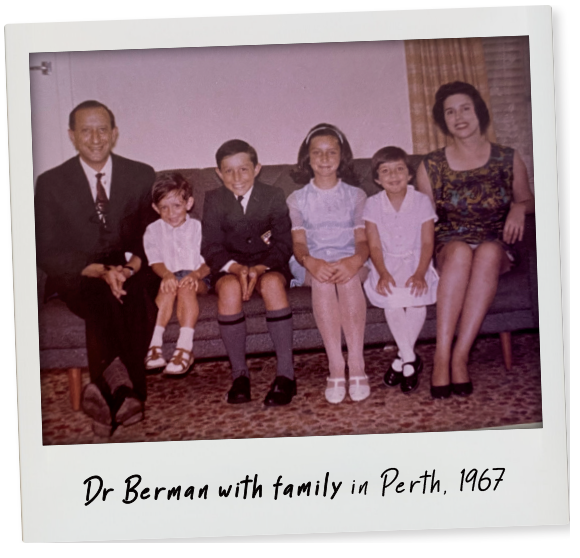
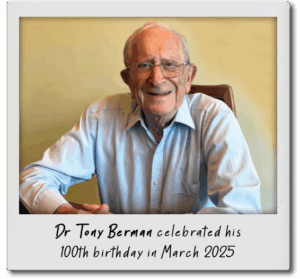 Tony Berman, at 22, was working as a senior casualty officer at West London Hospital in Hammersmith and had his eyes set on a hospital surgical career. But when his GP father, Ralph, died suddenly, Tony felt duty bound to take over the practice.
“My entry into general practice was clouded by grief for my father and disappointment for myself,” he writes in his memoir. “Although I spent eight years in the practice, I never felt contented with it… I found the work boring and worrying at the same time. In retrospect, I think I was too young and naïve to be working on my own.”
By 1955, his frustration reached a point where he wanted an alternative, and he applied to join the British Colonial Medical Service. He was posted to Northern Nigeria, leaving London on 29 December 1955, on the boat train to Liverpool to make the 13-day voyage to the capital, Lagos.
His first posting was to Makurdi, one or two nights by train from Lagos. The work was hectic.
“There were 100 or more outpatients to be seen before breakfast and then operating lists, ward rounds and administration,” he writes. “In addition, there were the public health aspects, touring the district… outlying dispensaries to be supervised and acting as the Coroner’s pathologist… The ultimately very successful campaigns against smallpox and yaws were in full swing.”
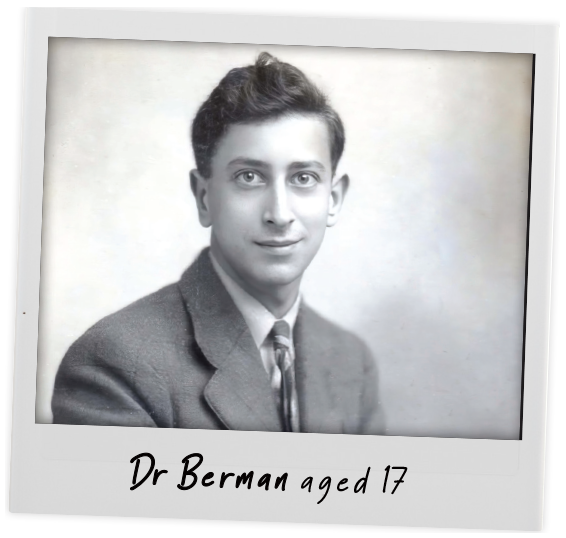
Three weeks later, Dr Berman was transferred as Area Medical Officer to Wukari, about 180km east of Makurdi.
“My memories of Wukari involve rats, bats, snakes, scorpions, and vast swarms of beetles and other insects,” he writes.
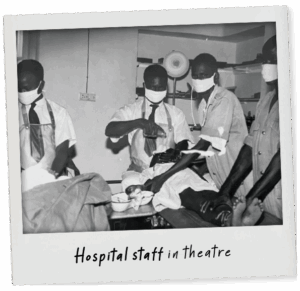
“My base was the hospital which had about 60 beds, staffed by a nursing superintendent, his dozen or so nurses, a pharmacist and a laboratory technician. The structure was mud and thatch, and the operating theatre had the usual gap between roof and eaves allowing flying insects in… The operating light was a Tilley lamp suspended beneath a home-made reflector made of aluminium. Operating at night was complicated by the swarming insects which were attracted by the light and fell into the open operation wound. These had to be cleaned out at the end of the operation and seemed not to interfere with the healing process.”
His wife Muriel and daughter Louise joined him three months later. His next posting in November 1956 was to Bauchi, the provisional headquarters with a fairly large hospital. Their son Ralph was born shortly after.
 “Touring the outlying dispensaries and leprosy clinics was relatively easy, seldom requiring trekking on foot. I remember only one occasion when an outbreak of anthrax was reported from a distant village, and I had to drive to a river and then walk about 10 miles (16km) after being ferried across.
“The work was fascinating. Smallpox, epidemic meningitis, tuberculosis and leprosy were rife, and gonorrhoea so common as to be regarded as part of normal life rather as we regard the common cold. Through constant practice, I became quite expert in the ancient art of urethral dilatation.
“The pattern of disease was far different from that in Britain… The ‘tropical diseases’ such as malaria, schistosomiasis, filariasis, trypanosomiasis and severe dysentery were all around, but a large part of the practice concerned diseases which would have been familiar to an English doctor of 1760, though never seen by one in 1960. The obstetrics were equally primitive and obstructed labour common.”
In September 1957, the family accompanied Dr Berman on eight months of study and recreation leave in England, where he enrolled in a Diploma in Tropical Medicine and Hygiene course at the London School of Tropical Medicine.
The family returned to Nigeria in April 1958 for a three-month posting in Katsina, one of the northernmost provinces, very near the southern edge of the Sahara Desert.
 “I was the only doctor there for most of the time,” he writes. “Tropical ulcers were rife, and amputation of lower limbs required frequently. The surgical load was so great the theatre nurse did the amputations to leave me time to attend to the rest of the surgery. He was very expert.
“Another seasonal condition was intestinal obstruction in children caused by eating too many berries of a tree… I do remember some of the poor little boys who died although the obstruction had been relieved.”
In June, Dr Berman was transferred to Mubi, a small station, where the family spent the next 18 months.
“The most obtrusive wild animals around Mubi were hyenas, and we also saw baboons and leopards,” he writes.
“On one occasion, I was awakened by the eerie laughing cry hyenas make sometimes when quarrelling over a carcass… just outside the bush resthouse where I was sleeping… the only time in my life when I felt the hair on the back of my neck stand on end.
“Rabies was a constant worry. I had two patients with the disease in the hospital and I have never forgotten them. They died after a few days, to the relief of all, because they showed every sign of being terrified the whole time they were there.”
One night Dr Berman had to travel to a Roman Catholic mission about 60km away to attend to a European surveyor who had been taken seriously ill. Dr Berman’s car was followed by a rusty old ambulance.
“When I arrived at the mission, I found a very pale man lying down beside a bucket containing a large amount of blood which he had vomited recently. He had had a nasty haematemesis…
“After what seemed to be a very long time, the ambulance arrived. The driver and his companion seemed to be strangely elated. Their mood puzzled me until they opened the rear doors and proceeded to lift out a large dead hyena lying on the stretcher. They had run over the beast and regarded it as a trophy. I insisted the hyena be left at the side of the road, and my patient take its place on the stretcher.”
 In December 1959, Dr Berman went away on leave with his family to attend a course in Advanced Medicine at the London Hospital, his alma mater.
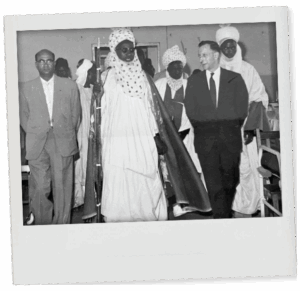
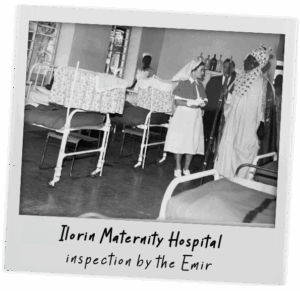
His next posting was to Ilorin, a big station with a senior medical officer, two medical officers, a General Hospital and a separate Maternity Hospital.
“Ilorin was very busy… about 1,200 deliveries per annum at the hospital. The only ones that concerned me were the abnormal ones. But these were common, and I was kept on the hop with emergencies. A day I remember well was an Easter Monday when I had to do four caesarean sections and an embryotomy, and had no break at all.”
After another round of leave in England, where their third child Rosalind was born, the Bermans returned to Nigeria in early 1962 for a posting in Yola, a provincial headquarters. Three or four months later, he was transferred again to Jos.
“At first, I was in charge of the General Hospital. Later, I was in charge of the Plateau Hospital, which was for senior government officers and (unofficially) Europeans. Later still, I acted as SMO when the incumbent was on leave.”