


Rethinking the terms: ‘doctor in training’ and ‘junior doctor’

Dr Owen Taylor-Williams
AMA (WA) DiT Co-Chair

Claim EA: Professional Reading CPD hours with AMA CPD Home. Learn more in our helpful article and log your hours.

One year ago, the British Medical Association (BMA) made headlines by retiring the title of ‘junior doctor’. As the BMA said, it “implies doctors at this level are students, apprentices, and not fully qualified”.

For those who spend a decade or more in this so-called ‘junior’ phase, it raises uncomfortable questions – how can a doctor with more than 10 years of service still be considered ‘in training’ or ‘junior’, while in most other professions this would be seen as having expertise?

Language matters. The labels we use shape patient perceptions, workplace culture, and our own sense of identity as professionals. To patients, ‘junior doctor’ can wrongly suggest inexperience. Further, it blurs the boundary between ‘training’ and ‘work’.

Too often, work performed by doctors in training (DiTs) is simultaneously described as ‘learning’ – an ambiguity that employers may exploit, and that risks devaluing our contribution to the health system.

Recently, the AMA (WA)’s Hospital Health Check survey of DiTs found that although all respondents were technically ‘in training’, only 62% felt their current roles prepared them for their future careers. In other words, nearly two in three believed they were providing service without adequate training benefit. So, are they really doctors ‘in training’?

The BMA’s change is not just about semantics; it’s about recognition. Moving to ‘resident doctor’ offers clarity and dignity. It tells patients they are being cared for by a qualified professional. It tells doctors their work is valued.

Australia has not yet grappled with this question. But should we? Do our current titles reflect the reality of our work, or do they inadvertently diminish it?

One year on from the BMA’s bold move, the time feels right for a conversation in Australia about how we describe DiTs. Perhaps it’s time we asked ourselves the same question. Do we really want to keep calling ourselves ‘junior doctors’ after a decade of work? Or is it time for a title that finally reflects the reality of what we do?

An extract from the BMA article (Sep 2024)

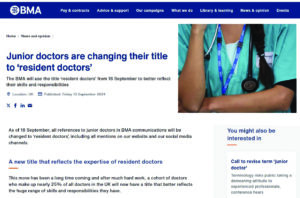
Junior doctors are changing their title to ‘resident doctors’

As of 18 September [2024], all references to junior doctors in BMA communications will be changed to ‘resident doctors’, including all mentions on our website and our social media channels.

The call to replace the title was presented by then FY1 doctor Sai Ram Pillarisetti who explained how the term ‘junior doctor’ was both inappropriate and misleading.

“It may imply lack of experience or competence, creating a misunderstanding about the work we do and the qualifications we hold.

“Every day these so-called junior doctors act as the first point of contact for sick and unwell patients on the ward, they’re in theatre operating on your loved ones, and they’re leading teams across various specialties in health service.”

After a formal vote, the change was agreed and a date of 18 September set for the new resident title to be implemented.

The BMA is now working with our colleagues across the NHS and stakeholders including healthcare organisations, royal colleges and media outlets to strongly encourage the wider adoption of the term ‘resident doctors’. We are grateful to the secretary of state for health for indicating his support for this important change in language.

For the confidence and reassurance of patients, it is vital that it’s understood there’s nothing ‘junior’ about resident doctors.

Start typing and press Enter to search