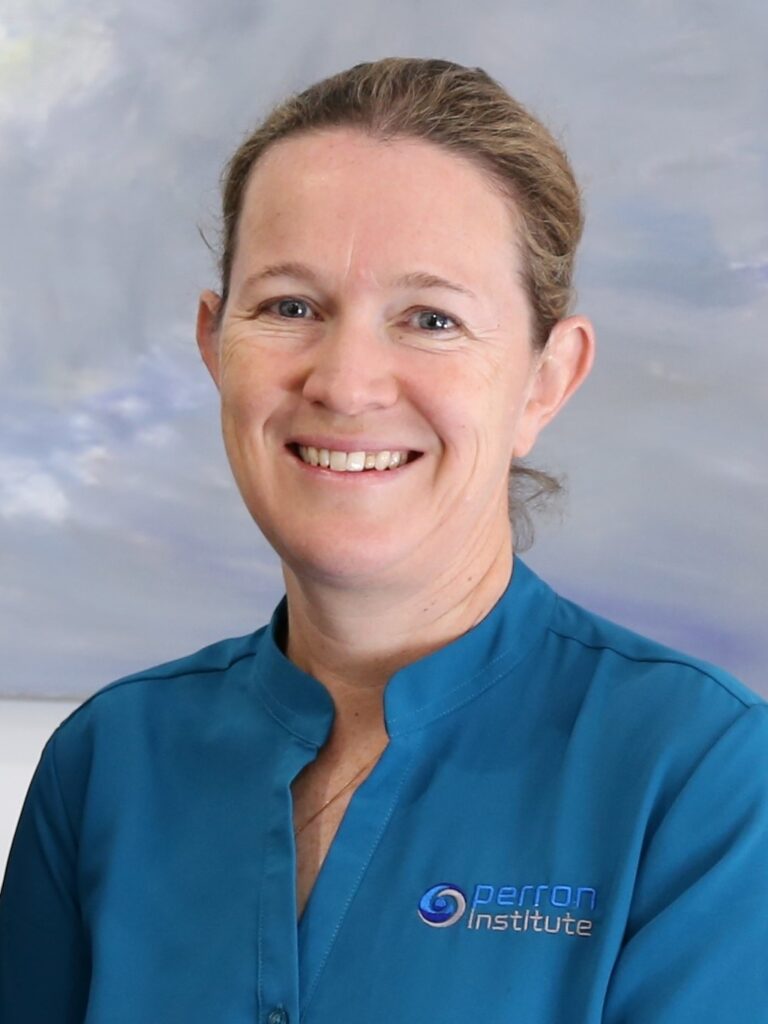
Being appointed Medical Director of the Perron Institute is an extremely humbling experience. I’m acutely aware that I stand on the shoulders of giants, Professor Frank Mastaglia and Professor David Blacker, who shaped the Institute into what it is today: a place where research begins and ends with the patients we serve.
I’m a neurologist with a passion for neuromuscular and neurogenetic disorders – fascinated by how the body moves and what happens when it doesn’t work the way it should. My journey began in Sydney; but it was my mentors in neurology who encouraged me to go West to work with Professor Mastaglia and Professor Phillipa Lamont.
That was the beginning of a career-long connection to what was then the Australian Neuromuscular Research Institute – now the Perron Institute for Neurological and Translational Science.
I completed a PhD under Professor Mastaglia’s guidance. Along the way, I discovered something that would fundamentally shift how I saw medicine: the transformative power of research. Being a doctor at the face of clinical medicine has always been my passion, but now I learnt that I could do more – by involving patients in research, I wasn’t just helping them navigate their illness; I was empowering them to contribute to the future of care for patients globally.
For patients living with conditions that aren’t curable, the standard of care often lacks something essential: hope. But when patients are active partners in research – whether through trials, registries, or observational studies – they feel seen and heard, as though someone is standing beside them.
Opportunities at the Perron Institute and Fiona Stanley Hospital allowed me to continue clinical practice and translational research whilst stepping into leadership roles. I now also hold the Foundation Chair of Neurology, a shared role between the University of Notre Dame, Murdoch University and Fiona Stanley Hospital.
“
My hope is that we become not just a hub for clinical excellence, but a place where patients are true partners in progress – where they know that even if a cure isn’t available today, their involvement in research is shaping tomorrow.
At the Perron Institute, research is deeply translational. It starts with excellent patient care, guided by their real-world needs. We look after them clinically and, with consent, gather their clinical information and biological samples; identify novel biomarkers and treatment targets; and bring discoveries back to the bedside through clinical trials. This ‘bed-to-bench and back-to-bedside’ model is going to be embedded in everything we do.
We’ve expanded our scope to cover a wide range of neurological conditions – from stroke to Parkinson’s disease, to neuroimmunology and multiple sclerosis, epilepsy, pregnancy-related neurological issues, neurogenetics and neuromuscular disorders. Across all of these, our focus remains the same: patient-centred care underpinned by rigorous science.
Looking ahead, we’re working to digitise our data collection to connect with national and international registries, build collaborative networks, and ensure that Australia plays a leading role in global neurological research. Western Australia may be a small state, but we have the potential to punch well above our weight with strong local, national and international collaborators. And of course, very enthusiastic patients.
My hope is that we become not just a hub for clinical excellence, but a place where patients are true partners in progress – where they know that even if a cure isn’t available today, their involvement in research is shaping tomorrow.
Research, when it’s done right, isn’t separate from patient care. It is an essential component to offering the best patient care.