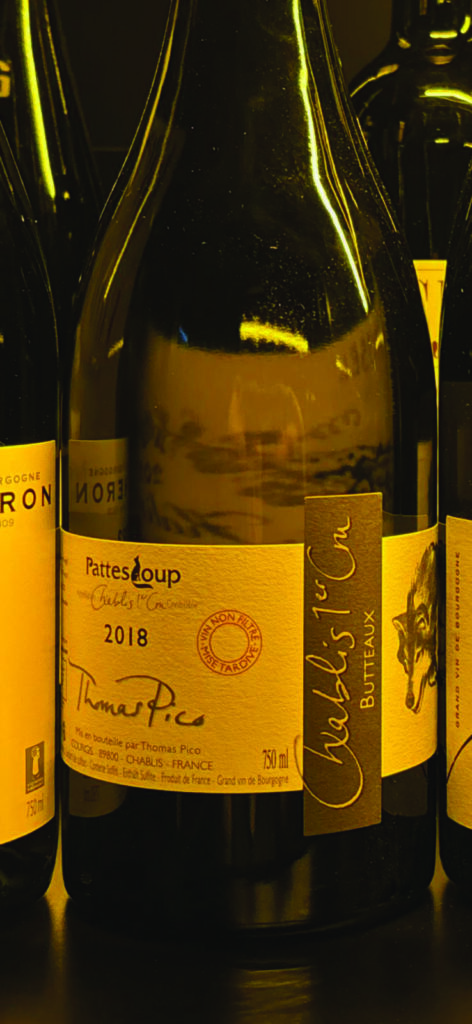
Every so often, I manage to catch up with a sommelier friend of mine, ideally at a restaurant where we can bring a bottle (or several).
I usually spend weeks hunting for something exotic, hoping that one day I will bring something better than the effortlessly beautiful bottles he casually grabs. It’s a great chance for me to learn from a genuine, accredited expert; and at our most recent dinner had a surprising advantage in an area I’m still terrified about: faults.
One of the bottles of wine bought for the night was a French Chardonnay. As the logical progression from a beautiful Tasmanian Riesling, we popped the cork and gave it a try.
My initial thought was that it was very “French” – unusual and ‘challenging’. Without him there, I definitely would have drunk the whole thing, not particularly enjoyed it, and then put it down to experience. After a careful assessment though, my sommelier friend came to the rescue. “Ahh, it’s corked. Damn.” And started pouring it back into the bottle.
While I’ll bet plenty of simply awful wine has been called ‘corked’ over the years, despite the cork being blameless, being properly ‘corked’ is a very specific issue.
Cork taint refers to a set of undesirable smells or tastes which are commonly described as ‘wet cardboard’, ‘wet dog’ or ‘mouldy basement’ – but all are just damp and unpleasant aromas. In milder cases, cork taint can merely mute flavours, causing the wine to smell blunted, closed or uninteresting. And while there are a few potential causes of these issues, the main culprit is 2,4,6-Trichloroanisole (TCA).
Humans are exquisitely sensitive to TCA, with some reports stating levels as low as 1 ng/litre are detectable, although there seems to be a wide variability.
Interestingly, TCA doesn’t occur naturally. It is created when fungi found in some cork wood are treated with halophenols: antimicrobial agents used to process wood. Certain fungi have a defence mechanism that alters these chemicals to render them inert, creating TCA in the process.
Luckily, TCA is not harmful to humans, as I am sure I’ve had a few bottles absolutely redolent with the stuff and just blamed my own inexperience. Some estimates put the proportion of affected bottles between 1–5%, which is frankly madness.
And while cork production and technology is improving, the idea that you could have even 1 in 100 bottles as ‘bad’ seems like awful business practice, if nothing else. However, the alternative seems unconscionable.
Indeed, the screw-cap (also called a Stelvin) continues to remain passè in much of the world for a number of reasons. It’s a fascinating device worthy of its own discussion. But suffice to say if you don’t have a cork, you can’t get cork-taint, so there are certainly advantages.
That’s not to say there aren’t other wine faults that can affect wine. After asking my friend what to do if you’re worried, his suggestion is “just ask”.
If it’s genuinely corked, it should be replaced (as happened with our ill-fated chardonnay). But what if if that’s ‘just how it is’? Well, feel free to say you don’t like it (politely)… but don’t expect a refund.