




Pulsed Field Ablation (PFA)
A breakthrough in the treatment of atrial fibrillation

Dr Balvinder Handa
Consultant Cardiologist & Cardiac Electrophysiologist

Atrial fibrillation (AF), the most common arrhythmia encountered in clinical practice, affects millions of people worldwide and poses significant challenges in its management. Whilst the mechanism underlying AF is not fully understood, it is characterised by disorganised electrical activity in the atria.
AF results in an irregular and often rapid heartbeat, leading to symptoms such as palpitations, fatigue and breathlessness. More importantly, it is associated with serious complications, including an increased risk of stroke, heart failure and mortality.
Catheter-based ablation has become a cornerstone of treatment for symptomatic AF, particularly in patients who do not respond to, or cannot tolerate medical therapies. Pulmonary vein isolation (PVI) remains the principal target for these procedures, as the pulmonary veins are key sites for the initiation and maintenance of AF.
Traditional methods such as radiofrequency (RF) ablation and cryoablation, which rely on thermal energy to create lesions in cardiac tissue, have long been the standard approaches. However, these techniques have limitations, including a steep learning curve for the operator, the potential for collateral damage to surrounding structures, and procedure-related complications.
In recent years, pulsed field ablation (PFA) has emerged as an innovative alternative that offers a fundamentally different approach. By using high-voltage electric pulses to induce electroporation – a mechanism that disrupts cellular membranes – PFA achieves precise, non-thermal tissue ablation. This technique is rapidly gaining recognition for its efficacy, safety, and its potential to revolutionise the treatment of AF.
“ Pulsed field ablation is an innovative technique that achieves precise, non-thermal tissue ablation by using high-voltage electric pulses to induce electroporation. It is rapidly gaining recognition for its efficacy, safety, and its potential to revolutionise the treatment of atrial fibrillation.
Understanding PFA
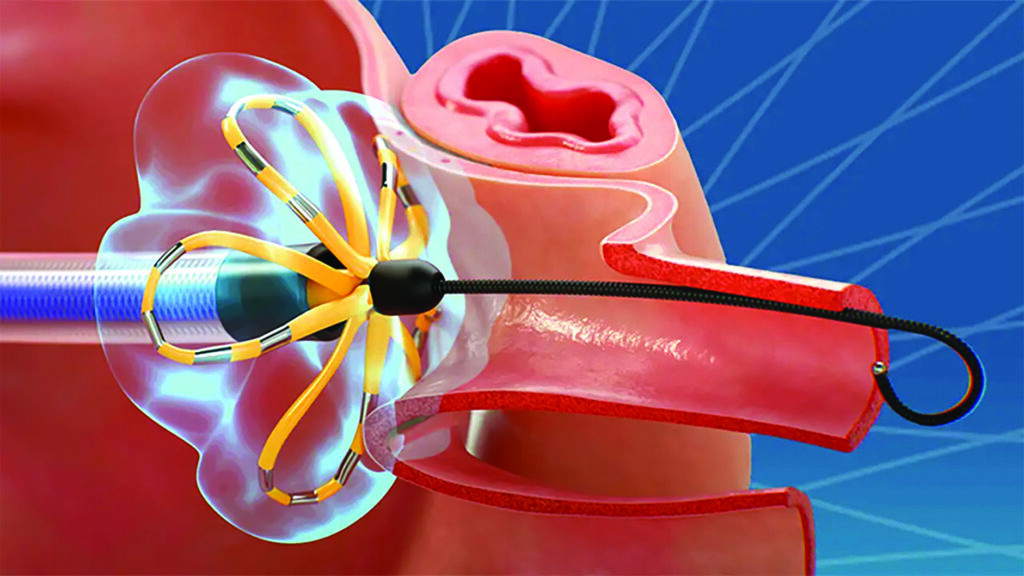
PFA is a cutting-edge technology designed to selectively target myocardial tissue while minimising damage to adjacent structures. Unlike traditional thermal ablation methods, PFA does not rely on heat (as in RF ablation) or cold (as in cryoablation) to create lesions. Instead, it employs a series of short, high-voltage electric pulses (typically 1,000–2,000 V/cm) that are delivered over microseconds. These pulses generate a transmembrane voltage across the targeted cells, causing the lipid bilayer of the cell membrane to destabilise and form nanopores.
This process, known as electroporation, is the core mechanism of PFA. When these nanopores are permanent, the cells undergo irreversible electroporation, leading to cell death and the creation of a durable lesion. By disrupting the electrical conduction pathways responsible for AF, PFA effectively isolates the pulmonary veins and interrupts the abnormal circuits sustaining the arrhythmia.
Electroporation: a novel mechanism
Electroporation is a well-established technique in molecular biology and oncology, where it is used to enhance the delivery of drugs or genetic material into cells. In cardiology, this mechanism has been adapted for therapeutic purposes. When an electrical field is applied to cell membranes, the stress induced by the voltage difference causes the lipid molecules in the bilayer to rearrange, forming nanopores.
Electroporation can be either reversible or irreversible. Reversible electroporation creates transient pores, allowing cells to recover if the stimulus is removed.
In contrast, irreversible electroporation results in permanent pore formation, leading to cell death and tissue necrosis. PFA relies on the latter to achieve long-lasting ablation of myocardial tissue.
Key advantages of PFA
The unique mechanism of PFA offers several advantages over traditional ablation techniques, making it a promising alternative for the treatment of AF.
Selective tissue targeting
One of PFA’s most significant advantages is its ability to ablate myocardial tissue while sparing surrounding structures. The high-voltage pulses are highly localised, allowing for precise lesion formation without excessive energy dissipation. This reduces the risk of damaging adjacent structures, such as blood vessels, nerves and the oesophagus, which are often affected during thermal ablation procedures.
Improved precision and efficacy
PFA achieves pulmonary vein isolation more efficiently, often requiring fewer applications compared to RF ablation. Additionally, it is effective in ablating a wide range of tissue types, including both epicardial and endocardial layers, which can be more resistant to traditional methods. This broad applicability enhances its potential to treat complex arrhythmias beyond AF.
Reduced procedure times
PFA shortens procedure times compared to RF ablation. The rapid action of the electric pulses and the reduced need for extensive mapping and adjustments contribute to this efficiency. Shorter procedures are beneficial for both patients and operators, improving patient safety and reducing the strain on limited healthcare resources.
Minimised risk of thermal injury
Thermal energy-based techniques are associated with complications such as oesophageal injury, phrenic nerve damage and thrombus formation. PFA’s non-thermal mechanism significantly reduces the likelihood of these complications, offering a safer alternative for patients with complex anatomies or high-risk profiles.
Potential for broader applications
Although PFA is primarily used for pulmonary vein isolation, its precision and efficacy suggest potential applications in treating other arrhythmias. These include persistent AF, atrial flutter and ventricular tachycardia, as well as arrhythmias associated with atrial scar tissue and fibrosis.
Clinical evidence supporting PFA
The clinical evidence for PFA is still evolving, but early studies have been highly encouraging.
The ADVENT trial, one of the first randomised studies comparing PFA and conventional thermal ablation for paroxysmal AF, demonstrated that PFA was at least as effective as RF ablation in achieving long-term freedom from AF. Importantly, the study highlighted PFA’s favourable safety profile, with a lower incidence of complications.
Similarly, the PULSED-AF pivotal trial, a multicentre prospective study, reinforced these findings. The trial reported high rates of acute pulmonary vein isolation with minimal complications. Follow-up data showed comparable freedom from AF between patients treated with PFA to those undergoing RF ablation. The incidence of adverse events and complication for patients treated with PFA was lower than those reported for RF ablation.
Observational studies and smaller trials have also highlighted the potential of PFA to reduce procedural risks, particularly those related to thermal energy. These include oesophageal injury, pulmonary vein stenosis and phrenic nerve damage, all of which remain challenges in traditional ablation techniques.
Future directions and challenges
While PFA represents a significant advance, several areas require further exploration to fully establish its role in the treatment of AF and other arrhythmias.
Large-scale clinical trials
Although initial studies have shown promising results, more extensive trials are needed to validate PFA’s efficacy and safety in diverse patient populations. Long-term follow-up data will be critical to determine its durability and overall outcomes compared to traditional methods.
Optimisation of parameters
Refining the energy delivery parameters, such as pulse duration, voltage and electrode configuration, will be crucial to maximising the effectiveness and safety of PFA.
Expanding indications
PFA’s potential to treat other arrhythmias, including ventricular fibrillation and atrial tachycardia, remains an exciting avenue for research. Investigating its role in addressing persistent and longstanding AF, which are often more challenging to manage, could further broaden its applications.
Growing experience with PFA in Western Australia
The adoption of PFA in Western Australia has grown rapidly since its introduction, with over 600 AF ablations performed to date, predominantly using the FARAPULSE™ PFA System by Boston Scientific.
PFA is now widely available across WA’s major cardiac centres, including Sir Charles Gairdner Hospital and Fiona Stanley Hospital, both of which are tertiary institutions equipped to handle complex arrhythmia cases.
Additionally, a significant volume of procedures has been conducted in private hospitals with dedicated electrophysiology cardiac catheter labs, such as The Mount Private Hospital and St John of God Subiaco and Murdoch.
Conclusion
Pulsed field ablation represents a major advance in the treatment of atrial fibrillation, offering a novel, non-thermal approach to tissue ablation. Its ability to selectively target myocardial tissue while minimising collateral damage makes it a safer and more precise option than traditional thermal methods. Early clinical evidence supports its efficacy in achieving pulmonary vein isolation, with reduced risks and shorter procedure times.
As research and clinical experience continue to expand, PFA has the potential to become a leading modality for AF ablation. Moreover, its versatility and precision suggest broader applications in the management of complex arrhythmias. While further studies are needed to fully establish its role, pulsed field ablation stands as a transformative innovation in the field of electrophysiology.
About the author
Dr Balvinder Handa MBBS FRACP MRCP (UK) PhD
Dr Handa is a Consultant Cardiologist and Cardiac Electrophysiologist specialising in the management and catheter ablation of cardiac arrhythmias based at Sir Charles Gairdner Hospital, The Mount Private Hospital and Hollywood Private Hospital. His clinical PhD and research at Imperial College London focused on mechanisms underlying atrial fibrillation.