An alarming increase in colorectal cancer in young people is putting a focus on earlier recognition of warning symptoms among GPs, writes Martin Saxon

Early onset colorectal cancer (EOCRC) has become the deadliest cancer for Australians under 50, being the number one cause of death in men and the third biggest in women.
Australia, along with New Zealand, now has the world’s highest rates of EOCRC, with cases rising by up to 8% annually. About one in nine new bowel cancer diagnoses occur in people under 50.
The percentage of EOCRC rose from 7.6% in 1992 to 11.1% in 2021, and Australians born in the 1990s are now three times more likely to get bowel cancer than people born in the 1950s. And younger patients are more likely to have advanced disease, with one study reporting that 81.9% of cases were Stage 3 and 4.
“The postulates for this are that it could be a different genetic disease,” says Sir Charles Gairdner Hospital’s Consultant Gastroenterologist Dr Nabil Siddique. “The mutations are slightly different in younger onset versus older onset, so that could be a reason why it’s more aggressive.
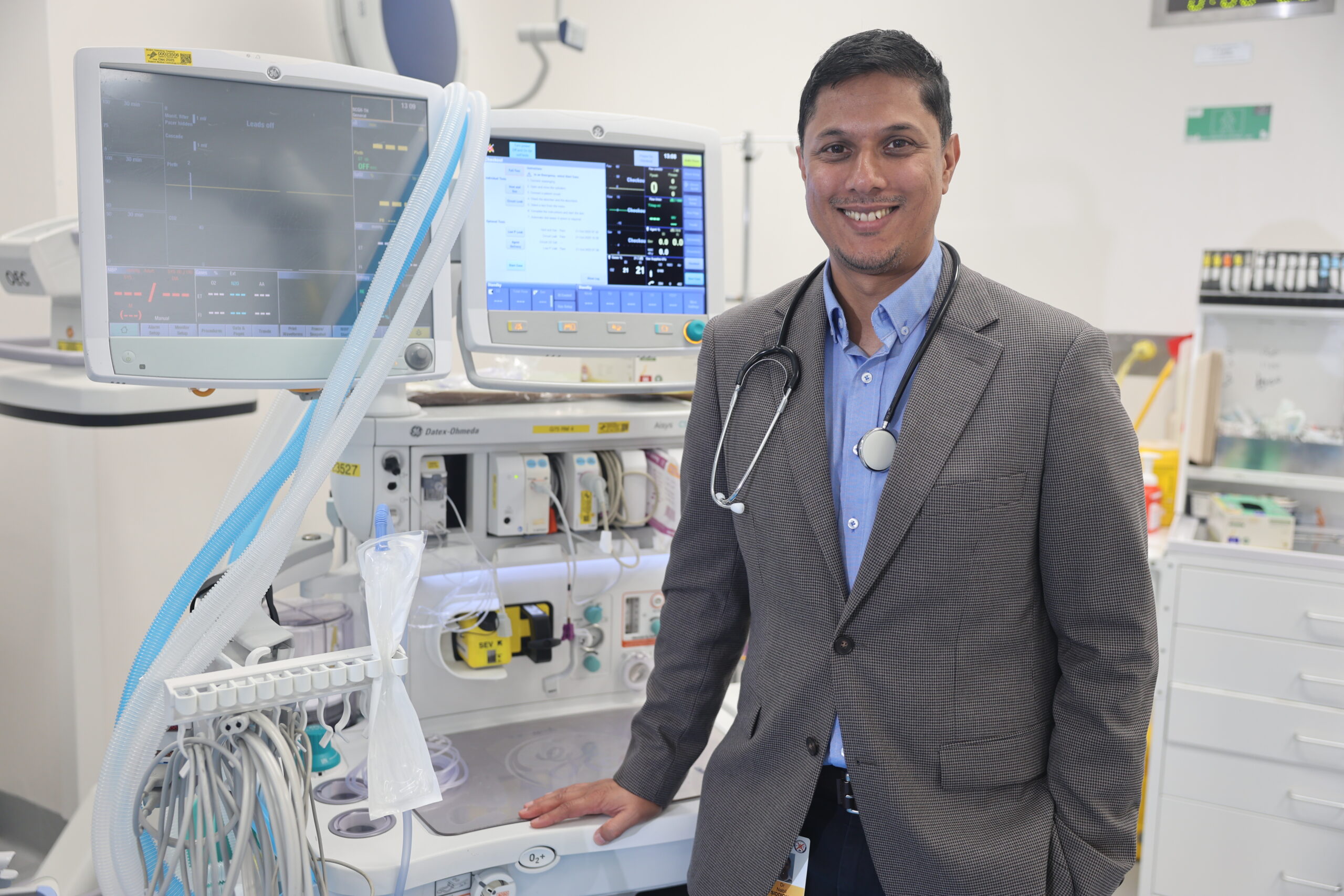
Dr Nabil Siddique, Gastroenterologist.
“But possibly the bigger thing is it presents later in younger people. Usually, younger people have, on average, symptoms present for around eight months, compared to around five months for older people. The timeframe to diagnosis is longer, usually around six months compared to two for older people. And both those things combined, and possibly the fact that it may be a slightly different genetic signature, means it tends to present later.
“So they have their symptoms for longer and the diagnosis takes longer. There are more visits to GPs before they get their diagnosis, and it does tend to be left-sided, sigmoid rectal cancers predominantly, needing more radical surgery, an increased risk of stomas, and the relapse rate is higher as well, unfortunately, in younger people. There’s a 50% chance of relapse at some point.”
This alarming upwards trend in EOCRC is putting the public health focus on earlier recognition of warning symptoms by younger adults, who might ignore changes in their bowel habits; greater awareness of the problem among GPs; and expanded access to screening.
Dr Siddique says patients in the younger age group have a “lower index of suspicion” for bowel cancer.
“Younger people are probably less likely to think they have bowel cancer or anything serious,” he says, “so they’re more likely to think it’s probably haemorrhoids or something else.
“If you ask them about rectal bleeding, and even in any other context when you’re seeing them for some other condition and you say, ‘Is there any blood in the stool?’, a lot of the time they don’t know. It’s not something they’re terribly conscious of. It might be intermittent bleeding. It may not happen very often. They don’t check their stools because they’re not worried. As whatever’s said and done, it’s still overwhelmingly an older person’s disease.”
“People don’t really want to talk about it, and GPs don’t want to press on it. And for those reasons these symptoms, usually in younger people, end up being labelled as something else; and then need multiple visits to a GP to unpack it all.
Dr Siddique says GPs’ index of suspicion is also low, and often the patient’s symptoms end up being diagnosed as something other than bowel cancer.
“A lot of the time GPs will not suspect cancer, and rectal bleeding will present as haemorrhoids or IBS and that type of thing,” he says.
“Abdominal pain, in the absence of any other symptom, tends to be of low predictive value. But certainly rectal bleeding together with abdominal pain accounts for well over 50%.
“Altered bowel habit is interesting because it depends on what you mean by ‘altered’. So, that can either be constipation or diarrhoea. Generally speaking we mean constipation, but the change in the calibre of the stool can also be an important symptom.
“But people don’t really want to talk about it, and GPs don’t want to press on it. And for those reasons these symptoms, usually in younger people, end up being labelled as something else; and then need multiple visits to a GP to unpack it all.”
To assist GPs, Dr Siddique is developing a program of face-to-face outreach to GPs to provide guidance and tools on how to recognise and manage patients presenting with symptoms that might suggest EOCRC. He is planning a large symposium for GPs to road-test the program on Saturday, 2 May. (CPD points from the RACGP are available. For registration, contact SCGOPHCG.HLGP@health.wa.gov.au.
“At the symposium, we’ll take them through the statistics of what’s happening, why it might be happening, and what we can do,” Dr Siddique explains.
“We’ll end with some real-life examples of what to do, because that’s probably the most useful thing for GPs. If you have a 50-year-old female with no symptoms, but her father had a bowel cancer at the age of 17, what would you do? Is that a colonoscopy; is that a screening case; or is it that you do nothing? And we’ll stimulate a discussion about real cases.
“It’s going to be very much GP-led. If you’re a GP on the ground, you need simple, straightforward information to be able to make that decision in real time. And then we’ll discuss strategies to help, such as screening for people who are 45 to 50, which is still an opt-in situation.
“Another thing we’re going to talk about with GPs is whether they should have a stock of screening kits to hand out to patients. I went to my local surgery yesterday and they just had two. Should GPs be proactive in doing that?”
Following up on the symposium, Dr Siddique is considering a schedule of program presentations at individual medical practices.
“We might do a lunchtime, 20 to 30-minute presentation with an opportunity for doctors to ask questions,” he says. “We’d make it very clinically relevant, instead of just throwing guidelines at GPs who have hundreds of other guidelines thrown at them.”
You're just getting to the good part! Log in to your AMA (WA) member account to continue reading, or join today for full access to exclusive content, member benefits, and more.
Month End Offer is live!
Get up to 40% off on AMAMedius
Sign in using your membership email and date of birth.