




Vaccination best defence amidst increase in measles cases

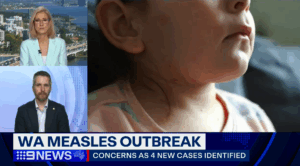
Dr Kyle Hoath with Channel Nine presenter Monika Kos. Image from Nine News
AMA (WA) President Dr Kyle Hoath appeared on Channel Nine in late September to provide medical advice after an active measles alert was issued for Perth and the Pilbara. While a total of 16 cases were reported in the last five years, more than 40 cases have been reported this year.
Dr Hoath expressed his concern at the outbreak due to the level of contagiousness. Measles can be spread by droplets, and people can contract measles even if they enter a room 30 minutes after an infected person had been there. He said being on the front foot with testing and exposure sites listed by the Department of Health (DOH) is very important.
Presenter Monika Kos asked why there had been a surge in cases.
“There are a number of factors, but the most alarming one is the drop in vaccination rate for measles,” Dr Hoath said. “It doesn’t take much of a drop in vaccination coverage for little pockets of infection to start to occur. So, although we’ve had some imported cases and some are travel-related, there are pockets of low immunity that have led to this outbreak.
“Vaccination is our best defence against measles.”
If someone not already immune to measles visited an exposure location during specified dates and times listed by the DOH, they are advised to monitor symptoms between 7-18 days after the visit. Persons who have received two measles vaccinations and those born before 1966 are considered immune to measles; though on rare occasions, vaccinated individuals may develop a mild illness. Free MMR vaccines are available to people susceptible to measles, even if they are not eligible for Medicare. Serology is not required before vaccinating.
Health professionals should be alert for measles, particularly among returned overseas travellers – and ensure all staff have a high index of suspicion for measles in patients presenting with a febrile rash.
Symptoms of measles include fever, tiredness, runny nose, cough, and sore red eyes. A red blotchy rash appears 3-4 days later. The rash usually starts on the face before spreading down to the body and can last 4-7 days. People with measles usually feel very unwell, and some may end up in hospital.
Complications include pneumonia and, less often, encephalitis (inflammation of the brain). Those at risk of severe illness include immunocompromised people, young children, and pregnant women.